+91-9646339590



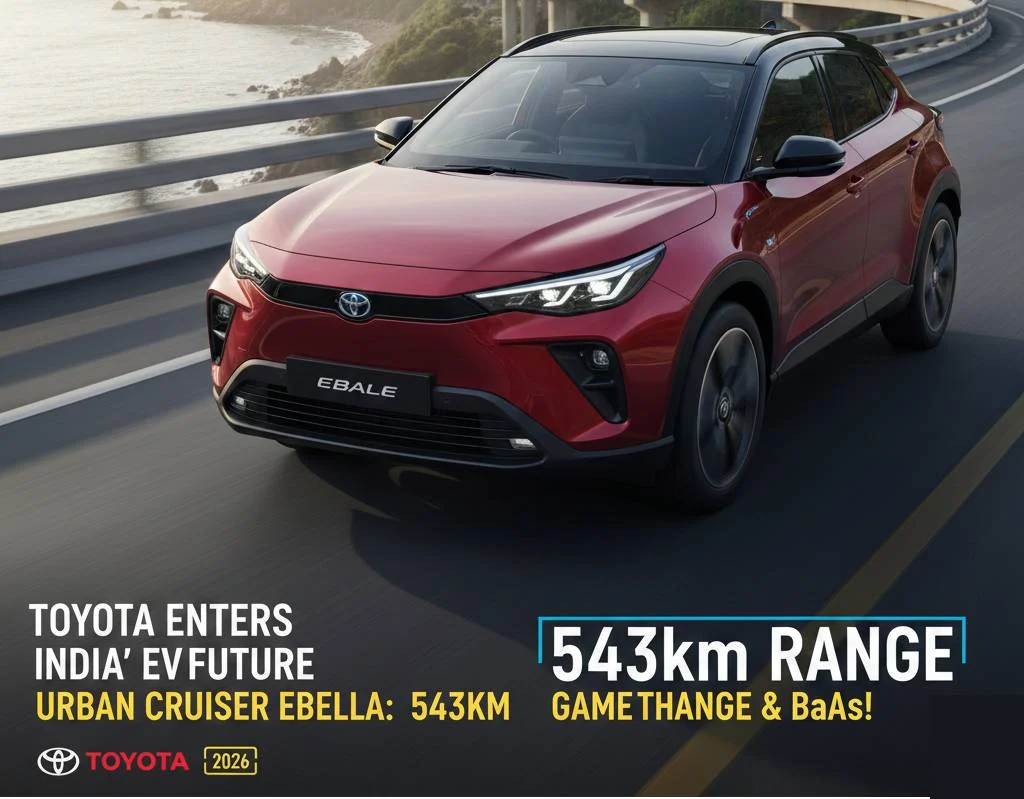
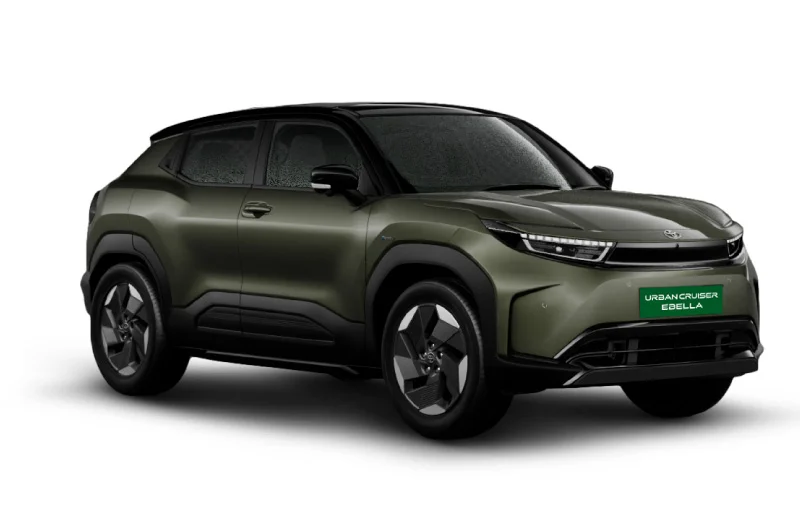
Toyota has officially unveiled the Urban Cruiser Ebella in India, marking its entry into the mainstream electric SUV segment after years of focusing on hybrid technology. The model has been introduced with bookings underway, while detailed variant-wise specifications and final pricing are being rolled out in phases.
The Ebella’s positioning is deliberate. Instead of entering early, Toyota waited for improvements in battery economics, charging infrastructure, and customer readiness. The result is a product designed for long-term usability rather than early-adopter experimentation.
Platform, Battery & Powertrain: What’s Confirmed vs Undisclosed
The Ebella is based on a dedicated electric architecture designed to optimize battery placement, cabin space, and crash energy management. Toyota has confirmed a claimed driving range of up to 543km under the MIDC cycle.
However, Toyota has not yet disclosed full technical specifications such as exact battery capacity (kWh), motor output figures, or detailed drivetrain configurations across variants.
Based on segment benchmarks and vehicles with similar range figures, the Ebella is expected to fall within the following technical band:
– Battery capacity: ~60–65 kWh (segment-aligned estimate)
– Drivetrain: Likely single-motor front-wheel drive configuration
– Performance tuning: Focus on efficiency and longevity rather than peak output
This approach aligns with Toyota’s global strategy of prioritizing durability and consistent performance over aggressive specifications.
Real-World Range: Practical Expectations
The headline 543km range is based on MIDC testing conditions, which typically reflect ideal scenarios. In real-world usage, range varies depending on speed, terrain, climate, and driving style.
Based on data from comparable EVs in India:
– City driving (high regeneration efficiency): ~440–460 km
– Highway driving (90–110 km/h): ~380–410 km
– Mixed usage: ~410–430 km
This places the Ebella among the higher-range EVs in its segment, especially for users who prioritize fewer charging stops over performance.
Charging Capability & Infrastructure Reality
The Ebella supports both AC home charging and DC fast charging solutions. While Toyota has not yet released full charging specifications, typical segment capabilities suggest:
– AC charging: Overnight full charge (~8–9 hours)
– DC fast charging: ~50–60 minutes for 0–80%
Charging infrastructure remains a key variable. According to the Government of India’s EV charging dashboard, public charging points have expanded significantly, but are still concentrated in urban clusters. This makes home charging the primary use case for most buyers.
Performance & Acceleration Characteristics
Toyota has not published official acceleration figures for the Ebella. However, vehicles in this category typically deliver:
– 0–100 km/h: ~8.5–9.5 seconds (estimated based on segment norms)
– Strong low-speed torque for city driving
Unlike performance-focused EVs, the Ebella is expected to prioritize smooth power delivery, ensuring predictable and comfortable acceleration in daily driving conditions.
Braking Performance & Stability
EV braking systems combine regenerative deceleration with conventional braking hardware. While official test data is not yet available, similar EVs in this class deliver:
– 100–0 km/h braking distance: ~38–42 meters
– Adjustable regenerative braking levels
The battery’s low placement improves vehicle stability and reduces body roll during emergency maneuvers.
On-Road Price Outlook in India
Toyota has not officially announced the full pricing structure of the Ebella. However, based on positioning, localization levels, and competitor pricing:
– Expected ex-showroom range: ₹20–28 lakh
Estimated on-road pricing (Delhi):
– Base variant: ~₹22.5–24 lakh
– Top variant: ~₹29–31 lakh
State EV policies may offer additional benefits, although incentives are gradually being reduced as adoption scales.
Variant Comparison (Indicative Structure)
Toyota has not released full variant-wise details yet. However, based on standard industry structuring:
| Feature | Base | Mid | Top |
|---|---|---|---|
| Infotainment | Standard touchscreen | Larger display | Premium large-format display |
| ADAS | No | Partial | Full suite |
| Sunroof | No | Yes | Panoramic |
| Camera System | Standard | Enhanced | 360° view |
| Connectivity | Basic | Connected features | Full connected ecosystem |
Final feature distribution may vary once official variant details are announced.
Interior & Technology Experience
The Ebella introduces a more modern cabin compared to traditional Toyota interiors, with emphasis on digital interfaces and connectivity:
– Large touchscreen infotainment system
– Digital instrument cluster
– Smartphone connectivity (wireless integration expected)
– Over-the-air update capability
Usability and interface responsiveness will be key factors, as EV buyers in this segment expect seamless digital interaction.
Safety & Crash Rating Outlook
Toyota has not yet released official crash test ratings for the Ebella. However, the use of a dedicated EV platform improves structural rigidity and energy distribution during impacts.
Expected safety equipment includes:
– Multiple airbags (likely 6 as standard)
– Electronic Stability Control (ESC)
– Advanced Driver Assistance Systems (ADAS)
With Bharat NCAP standards becoming more stringent since 2023, vehicles with robust structural engineering and active safety systems are increasingly achieving higher ratings. The Ebella is expected to align with these safety benchmarks once tested.
Driving Dynamics & Ride Quality
Toyota’s tuning philosophy typically favors comfort and predictability. The Ebella is expected to follow this approach:
– Suspension tuned for Indian road conditions
– Stable highway cruising characteristics
– Low cabin noise due to electric drivetrain
This makes it more suitable for family usage rather than performance-oriented driving.
Comparison with Key Rivals
| Model | Range (Claimed) | Battery | ADAS | Price (₹ lakh) |
|---|---|---|---|---|
| Toyota Ebella | 543 km | Not disclosed | Expected | 20–28 (est.) |
| MG ZS EV | 461 km | 50.3 kWh | Yes | 18–25 |
| Tata Nexon EV LR | 465 km | 40.5 kWh | Partial | 16–20 |
| Hyundai Kona Electric | 452 km | 39.2 kWh | No | 24–25 |
The Ebella’s positioning is clear—higher claimed range and Toyota’s reliability advantage, balanced against a likely premium price.
Ownership Economics & Practical Considerations
Electric vehicles reduce operational costs significantly:
– Running cost: ~₹1–1.5 per km (home charging)
– Lower maintenance requirements
– Expected battery warranty aligned with industry norms (8 years range)
Toyota’s historical strength in resale value and service network could play a decisive role in long-term ownership confidence.
Market Context & Strategic Importance
India’s EV market remains in an early growth phase, with penetration slightly above 2% of total passenger vehicle sales as of 2025. However, growth rates remain strong, supported by regulatory push and improving infrastructure.
The Ebella represents Toyota’s calibrated entry into this space—prioritizing reliability, scalability, and long-term adoption rather than rapid early expansion.
Advantages & Trade-offs
Advantages:
– High claimed range (543 km)
– Toyota brand reliability and service network
– Practical, comfort-oriented engineering
Trade-offs:
– Final specifications not fully disclosed yet
– Likely premium pricing compared to Tata EVs
– Charging infrastructure limitations outside urban areas
Conclusion
The Toyota Urban Cruiser Ebella enters the Indian EV market with a clear objective—deliver a dependable, long-range electric SUV backed by Toyota’s reputation for reliability. Rather than chasing aggressive specifications, the focus remains on consistency, usability, and ownership confidence.
As full specifications and pricing become clear, the Ebella’s true competitive position will emerge. If Toyota aligns pricing with market expectations while maintaining its reliability advantage, the Ebella could become a significant player in India’s evolving electric SUV segment.
Key Takeaways
– Officially unveiled with bookings underway in India
– 543 km claimed range positions it at the higher end of the segment
– Real-world usability expected around ~420 km
– Focus on comfort, reliability, and long-term ownership
– Final pricing and specifications will determine market impact
FAQs
1. Is the Toyota Urban Cruiser Ebella launched in India?
Yes, it has been officially unveiled, with bookings underway and full rollout happening in phases.
2. What is the real-world range?
Approximately 400–460 km depending on driving conditions.
3. What is the expected price?
Around ₹20–28 lakh (ex-showroom), pending official confirmation.
4. Does it support fast charging?
Yes, DC fast charging is supported, with typical 0–80% times around one hour.
5. Are full specifications available?
Toyota has not yet disclosed complete variant-wise specifications.
6. Is it suitable for long-distance travel?
Yes, but depends on charging infrastructure availability along the route.
About the Author
Ankush Kumar is an automotive content specialist with over 5 years of experience covering global car markets, hybrid technologies, and EV ecosystem developments. His work focuses on translating complex automotive engineering concepts into practical insights for Indian buyers.
He has analyzed vehicle platforms, powertrain systems, and real-world usability trends across multiple brands. His content emphasizes data-backed evaluation, regulatory awareness, and ownership practicality.