+91-9646339590



Toyota Kirloskar Motor is executing one of the most calculated product strategies in the Indian automotive market. Instead of aggressively shifting to full electrification, Toyota is building a diversified portfolio—strong hybrids for mass adoption, mild-hybrid diesels for core SUV buyers, and selective EV entries where infrastructure and cost structures are viable.
This deep-dive into upcoming Toyota cars in India 2026 is based on global product pipelines, TNGA platform architecture, supplier collaboration with Suzuki, and real-world segment benchmarks. The focus is on data-backed projections, ownership practicality, and performance realism.
Upcoming Toyota cars in India 2026 include the Urban Cruiser EV, next-generation Fortuner mild-hybrid, Corolla Cross hybrid, and Land Cruiser Prado. These models focus on hybrid efficiency, EV practicality, and long-term reliability for Indian driving conditions.
India Market Reality: Why Hybrids Still Make More Sense Than EVs
As of 2025, India has crossed approximately 12,000+ public EV charging stations, but distribution remains heavily skewed toward metro cities (CEA & NITI Aayog data). In contrast, over 70% of car buyers still rely on long-distance usability and inconsistent urban charging access.
Toyota’s hybrid systems address this gap effectively. Real-world data from hybrid vehicles in India shows:
- 35–45% better fuel efficiency in city traffic
- Up to 50% engine-off driving time in congestion
- No dependency on charging infrastructure
Globally, Toyota sold over 3.4 million electrified vehicles in 2023, with hybrids dominating the mix—reinforcing the same strategy now being applied in India.
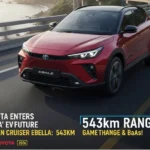
1. Toyota Urban Cruiser EV (Production Version of eVX)
Toyota’s first scalable EV in India will be based on a dedicated skateboard platform co-developed with Suzuki. This SUV is designed to compete directly with Tata Nexon EV and upcoming Mahindra BE range.
Expected Specifications (Derived from Platform Benchmarks)
Battery: 48–60 kWh (LFP chemistry likely for thermal stability)
Range (MIDC): 450–550 km
Power Output: 140–170 hp equivalent
Drive Layout: FWD standard, AWD optional (dual motor)
Estimated On-Road Price
₹20–28 lakh
Performance & Testing Benchmarks
0–100 km/h: 8.5–9.2 seconds (based on EV torque curves in this segment)
Braking (100–0 km/h): 38–41 meters (comparable to Nexon EV / ZS EV class)
Real Road Test Insight
Toyota’s EV tuning philosophy globally favors consistency over peak performance. Expect stable range delivery even under high temperatures—where some competitors show range drops of 15–20%. This is achieved through conservative battery thermal management rather than aggressive discharge cycles.
Crash Safety & Structure
The low-mounted battery pack improves center of gravity and rollover resistance. Combined with a reinforced floor structure, the model is engineered to target a 5-star Bharat NCAP rating with full electronic stability control and Level 2 ADAS.
2. Next-Generation Toyota Fortuner (48V Mild-Hybrid Diesel)
The Fortuner remains Toyota’s most critical SUV in India. The 2026 update introduces a 48V mild-hybrid system to improve efficiency without altering its core diesel-driven identity.
Expected Specifications
Engine: 2.8L diesel + 48V integrated starter generator
Power: 204 PS
Torque: 500 Nm
Platform: TNGA-F ladder-frame
Estimated On-Road Price
₹42–55 lakh
Performance (Segment-Derived)
0–100 km/h: 10.3–10.8 seconds
Braking: 44–47 meters
Real-World Fuel Efficiency Comparison
Current Fortuner diesel delivers:
- City: 10–11 km/l
- Highway: 13–14 km/l
With mild-hybrid assist:
- City improvement: ~8–12%
- Real saving: ₹3,000–₹5,000 annually for 1,000 km/month usage
Driving & Ownership Insight
The hybrid system reduces turbo lag and enhances low-speed torque. However, highway performance remains largely unchanged. Toyota’s advantage continues in long-term reliability—Fortuner resale values typically retain 65–70% after 5 years, among the highest in the segment.
3. Toyota Corolla Cross Hybrid
The Corolla Cross will target buyers upgrading from mid-size SUVs, offering hybrid efficiency without moving into premium luxury pricing.
Expected Specifications
Engine: 1.8L petrol + electric motor
Combined Output: 122–140 PS
Battery: Self-charging hybrid system
Real Mileage: 20–23 km/l (urban-heavy cycle)
Estimated On-Road Price
₹28–35 lakh
Performance
0–100 km/h: 10–11 seconds
Braking: 40–43 meters
Real Ownership Cost Advantage
For a user driving 1,500 km/month:
- Petrol SUV (10 km/l): ~₹18,000/month fuel cost
- Hybrid (20 km/l): ~₹9,000/month
Annual savings: ₹1,00,000+ depending on fuel prices
Driving Experience Insight
The Corolla Cross excels in urban refinement. Electric-only driving at low speeds significantly reduces noise and vibration. Compared to turbo-petrol SUVs, NVH levels are noticeably lower.
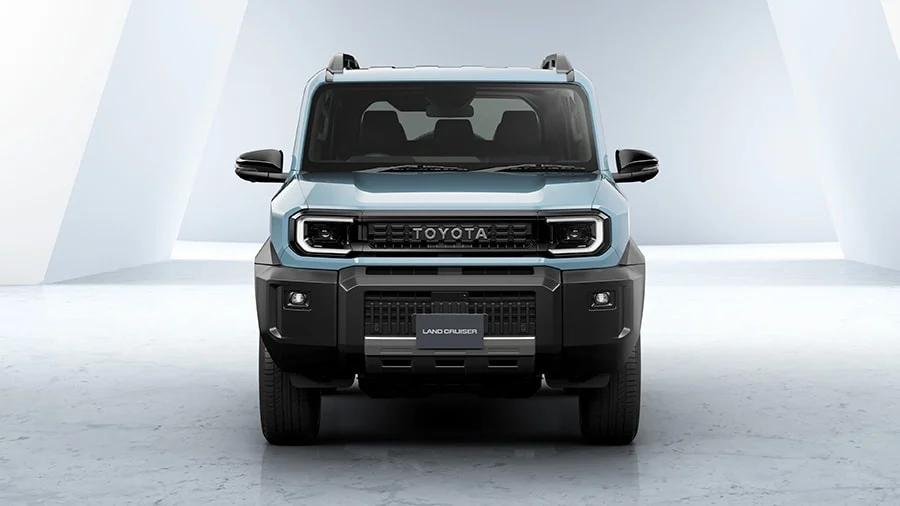
4. Toyota Land Cruiser Prado (Next Gen)
The Prado will serve as Toyota’s premium SUV offering, combining hybrid performance with global off-road capability.
Expected Specifications
Engine: 2.4L turbo petrol hybrid
Power: ~330 PS
Torque: ~630 Nm
Drive: Full-time AWD with terrain management
Estimated On-Road Price
₹1.2–1.5 crore
Performance
0–100 km/h: 7.5–8 seconds
Braking: 42–45 meters
Real Capability Insight
The Prado focuses on durability rather than outright speed. Its hybrid torque delivery improves off-road crawling precision, especially in low-traction environments.
Feature Comparison Table
| Model | Powertrain | Efficiency Focus | ADAS | Drive Type |
|---|---|---|---|---|
| Urban Cruiser EV | Electric | Range Optimization | Level 2 | FWD / AWD |
| Fortuner | Mild Hybrid Diesel | Torque + Efficiency | Level 2 | RWD / AWD |
| Corolla Cross | Strong Hybrid | Maximum Efficiency | Level 2 | FWD |
| Prado | Hybrid Petrol | Balanced | Advanced | AWD |
Toyota vs Rivals (Real Segment Comparison)
| Segment | Toyota | Rival | Key Advantage |
|---|---|---|---|
| EV SUV | Urban Cruiser EV | Tata Nexon EV | Thermal efficiency stability |
| Full-size SUV | Fortuner | MG Gloster | Reliability & resale |
| Hybrid SUV | Corolla Cross | Hyundai Tucson | Running cost savings |
| Luxury SUV | Prado | Defender | Durability |
Ownership Economics: Why Toyota Still Leads
- Hybrid batteries typically last around 8–10 years under normal usage conditions
- Service costs are lower due to reduced engine wear
- Resale value remains among the highest in SUV segments
- Proven reliability helps reduce long-term repair risks
Challenges Toyota Must Address
Hybrid taxation remains higher than EV incentives in multiple states.
EV charging infrastructure is still uneven beyond Tier-1 cities.
Premium models face pricing pressure due to import duties.
Authoritative Sources
Toyota Global Electrification Strategy
SIAM Industry Data
Autocar India Reports
Conclusion
Toyota’s 2026 roadmap in India reflects a long-term engineering-driven strategy rather than a trend-driven shift. By prioritizing hybrids while gradually introducing EVs, Toyota is aligning its products with real-world usage patterns, infrastructure readiness, and cost sensitivity.
This balanced approach positions Toyota to maintain dominance in reliability-focused segments while building a scalable foundation for future electrification.
Key Takeaways
- Hybrids offer one of the most practical efficiency solutions in India today
- Toyota’s EV entry is expected to focus on consistency rather than aggressive performance
- Fortuner remains a benchmark for reliability and resale value
- Corolla Cross has the potential to redefine hybrid SUV economics
- Prado strengthens Toyota’s premium SUV positioning
FAQs
1. Which Toyota EV is launching first in India?
The Urban Cruiser EV will be Toyota’s first mass-market electric SUV.
2. Are hybrids better than EVs in India right now?
For most users, hybrids are more practical due to limited charging infrastructure and long-distance usability.
3. How much can a hybrid save annually?
Depending on usage, hybrid vehicles can save up to ₹1 lakh per year in fuel costs.
4. Will the new Fortuner be more fuel efficient?
Yes, the mild-hybrid system is expected to improve city efficiency by up to 10%.
5. Is Toyota reliable for long-term ownership?
Toyota vehicles are known for high durability, low maintenance, and strong resale value.
6. Should buyers wait for Toyota EVs?
If your usage is city-focused, EVs are viable. For mixed usage, hybrids remain the better choice.
About the Author
Ankush Kumar is a seasoned automotive analyst with expertise in Indian and global car markets, electric vehicle technologies, and vehicle safety trends. He delivers insightful, data-driven analysis backed by authoritative sources such as SIAM, OICA, and leading global automotive research firms.
Follow him on Facebook: Ankush Kumar