+91-9646339590



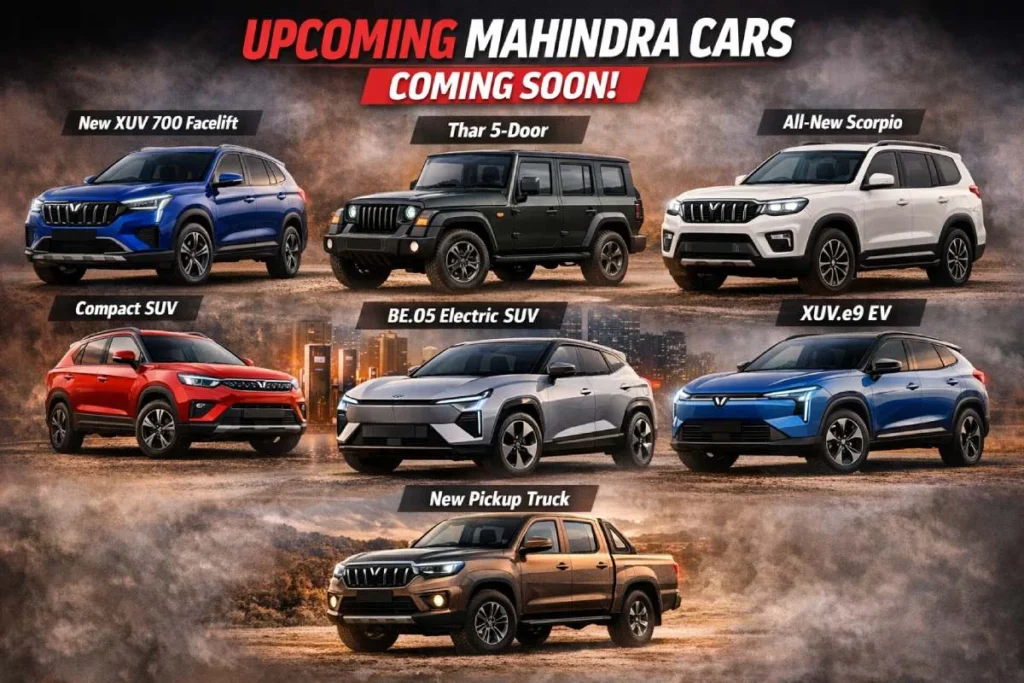
Mahindra is preparing one of the biggest EV transformations in India—and it could completely change how SUVs are built, priced, and driven.
Mahindra upcoming cars from 2026 onwards will mark a major shift toward electric SUVs built on new platforms, with a strong focus on real-world usability, software features, and long-term ownership value.
In simple terms: Mahindra isn’t just choosing EVs—it’s being forced to adapt as the market rapidly shifts toward electric mobility, stricter emission norms, and rising competition from Tata Motors and global players.
With over ₹10,000 crore invested in EV development and partnerships with global companies, Mahindra is moving beyond its traditional diesel SUV identity into a technology-driven automotive brand.
Quick Summary: What to Expect from Mahindra (2026+)
- All-new electric SUVs based on INGLO platform
- Real-world range of 400–500 km
- Fast charging support (up to ~175 kW)
- Advanced software features with OTA updates
- Focus on safety, performance, and SUV capability
Why Mahindra Is Moving Fast Into EVs
The shift is happening because the market is changing quickly.
Electric vehicles made up less than 3% of India’s car sales in 2023, but projections suggest this could rise to 25–30% by 2030 (NITI Aayog, 2024). At the same time, Tata Motors already dominates the EV space with around 65–70% market share.
Mahindra’s strategy is clear: instead of modifying petrol or diesel cars, it is building electric vehicles from scratch.
INGLO Platform: The Foundation of Future Mahindra Cars
The INGLO platform will power most Mahindra upcoming cars from 2026 onwards. It is designed specifically for electric vehicles, which allows better space, efficiency, and performance.
- Battery: 60–80 kWh options
- Range: Up to ~500 km (expected real-world)
- Drive: Rear-wheel drive and all-wheel drive
- Charging: Fast charging support up to ~175 kW
Mahindra is also working with Volkswagen for EV components, helping improve efficiency and reduce development time. More details: Volkswagen–Mahindra EV partnership.
Key Mahindra Upcoming Cars From 2026 Onwards
Mahindra BE.05
This will be Mahindra’s first major electric SUV aimed at high-volume buyers.
- Launch: 2026
- Range: 400–500 km
- 0–100 km/h: ~7–8 seconds
It features a sporty coupe-SUV design and a tech-focused cabin with minimal physical buttons.
Mahindra XUV.e8
This is the electric version of the popular XUV700, designed for families.
- Launch: Late 2026
- Range: ~450–500 km
- Seating: 5 and 7-seater
Expected to include ADAS features, large screens, and improved comfort for long drives.
Mahindra BE.07
A larger, more premium electric SUV for buyers looking for performance and space.
- Launch: 2027
- Power: ~250–300 PS
Mahindra Thar.e
Mahindra is also electrifying its iconic off-roader.
- Focus: Off-road capability with electric torque
- Platform: Modified ladder-frame
This could make off-roading easier thanks to precise torque control at low speeds.
On-Road Price (Estimated)
- BE.05: ₹25–35 lakh
- XUV.e8: ₹30–40 lakh
- BE.07: ₹35–45 lakh
- Thar.e: ₹28–38 lakh
Variant Comparison (Expected)
- Base: Standard battery, essential features
- Mid: Better range, more tech
- Top: AWD, ADAS, premium interiors
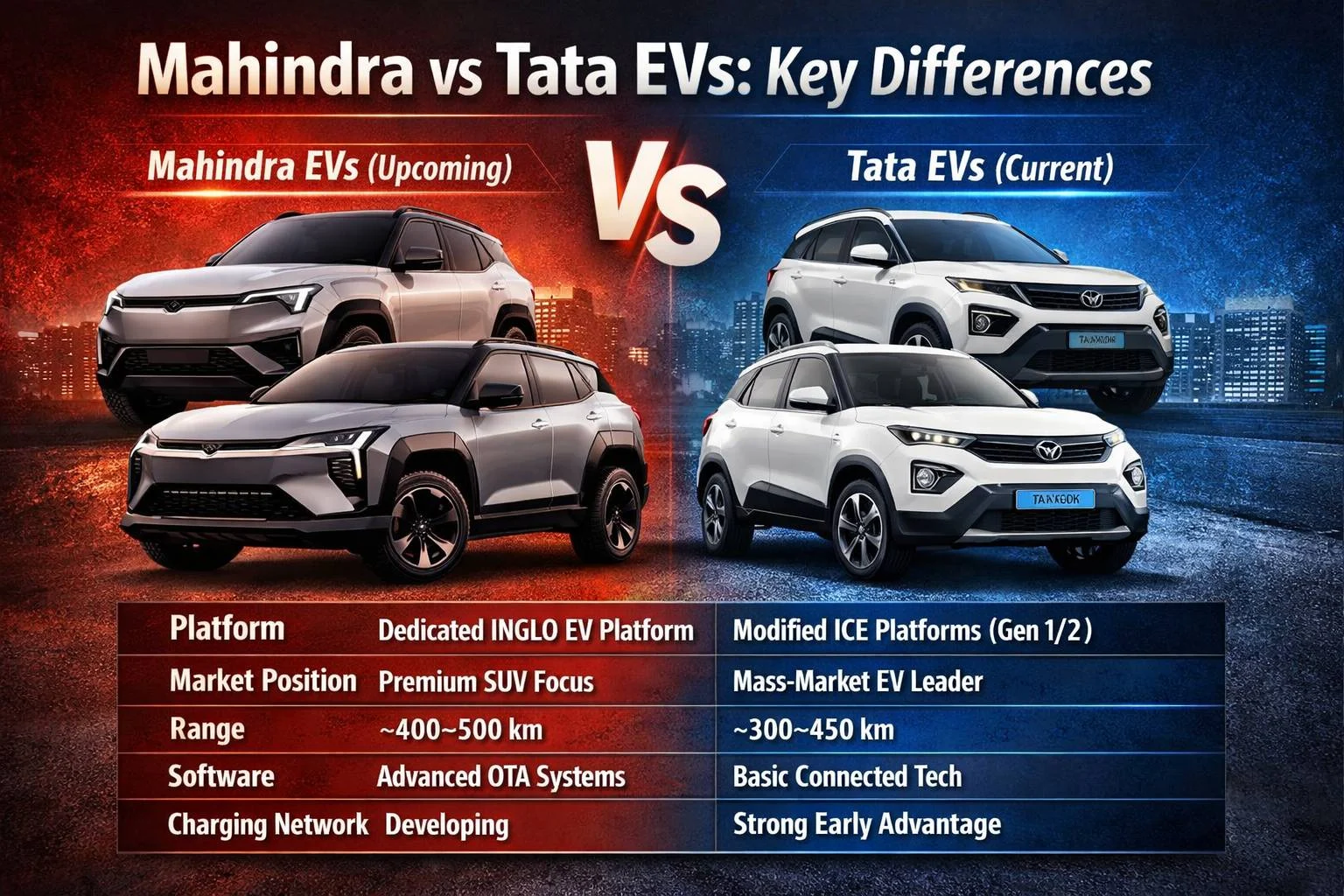
Mahindra vs Tata EVs: Key Differences
| Factor | Mahindra EVs (Upcoming) | Tata EVs (Current) |
|---|---|---|
| Platform | Dedicated INGLO EV platform | Modified ICE platforms (Gen 1/2) |
| Market Position | Premium SUV focus | Mass-market EV leader |
| Range | ~400–500 km | ~300–450 km |
| Software | Advanced OTA-based systems | Basic connected tech |
| Charging Network | Developing | Strong early advantage |
Mahindra is focusing more on future-ready platforms, while Tata currently leads in real-world adoption and infrastructure.
Crash Safety Expectations
Mahindra’s future EVs are expected to follow Bharat NCAP standards. Based on recent models, a 5-star safety rating is likely.
Official safety framework details are available at: Global NCAP official website.
Real-World Performance Expectations
- 0–100 km/h: 6.5–8.5 seconds
- Braking (100–0): ~36–40 meters
- Efficiency: ~6–7 km/kWh
Driving Experience: What Will It Feel Like?
- Acceleration: Quick and smooth due to electric torque
- Handling: More stable due to low battery placement
- Ride quality: Slightly firm due to battery weight
- Off-road (Thar.e): Better control in rough terrain
Pros and Cons
- Pros:
- Modern EV platform (not modified ICE)
- Strong performance potential
- Better long-term tech capability
- Cons:
- Charging network still limited
- Higher upfront cost
- Real-world performance yet to be proven
Ownership Reality: What Buyers Should Know
- Charging outside cities can still be difficult
- Battery performance may drop slightly over years
- Resale value of EVs is still evolving
Software and Technology Focus
Mahindra is moving toward software-driven vehicles with features like:
- Over-the-air updates
- Connected car apps
- Predictive maintenance alerts
According to industry estimates, software-driven vehicles could generate up to $650 billion annually by 2030. More insights: McKinsey report.
Conclusion
Mahindra upcoming cars from 2026 onwards represent a major shift in how the company builds vehicles. Instead of relying on its traditional strengths, it is investing in new technology, new platforms, and a completely new approach to mobility.
Mahindra may not be the first to dominate EVs—but it could be one of the most prepared for the next phase of the market.
Key Takeaways
- Mahindra is launching multiple EV SUVs from 2026
- INGLO platform will be the foundation
- Expected range is around 400–500 km
- Competition from Tata and Hyundai is strong
- Execution will decide success
Frequently Asked Questions (FAQ)
What are Mahindra upcoming cars from 2026 onwards?
Mahindra is expected to launch a new range of electric SUVs including BE.05, XUV.e8, BE.07, and Thar.e. These models will be based on dedicated EV platforms and focus on performance, range, and advanced technology.
What will be the expected price range of Mahindra EVs?
The estimated on-road price range for Mahindra’s upcoming electric cars is between ₹25 lakh and ₹45 lakh, depending on battery size, features, and drivetrain configuration.
What real-world range can buyers expect from Mahindra EVs?
Most upcoming Mahindra EVs are expected to deliver a real-world driving range of around 400 to 500 km per charge, depending on driving conditions, battery capacity, and usage patterns.
How do Mahindra EVs compare with Tata EVs?
Mahindra’s upcoming EVs will use dedicated platforms like INGLO, offering better scalability and performance potential, while Tata currently leads the market with a wider lineup and stronger charging ecosystem.
Is charging infrastructure a concern for Mahindra EV buyers?
Charging infrastructure in India is improving, especially in metro cities and highways, but availability can still be limited in smaller towns, which buyers should consider before purchase.
Are Mahindra upcoming electric cars safe?
Mahindra’s future EVs are expected to comply with Bharat NCAP safety standards and are likely to target high crash safety ratings based on the company’s recent track record.
Ankush Kumar is an automotive analyst specializing in electric vehicles, luxury cars, and real-world performance benchmarking. His work focuses on ownership insights, charging behavior analysis, and practical usability to help buyers make informed decisions based on real conditions rather than specifications alone.
He tracks industry data from global agencies, manufacturer reports, and road test benchmarks to deliver high-authority automotive analysis tailored for Indian buyers.
Follow on Facebook: Ankush Kumar