+91-9646339590



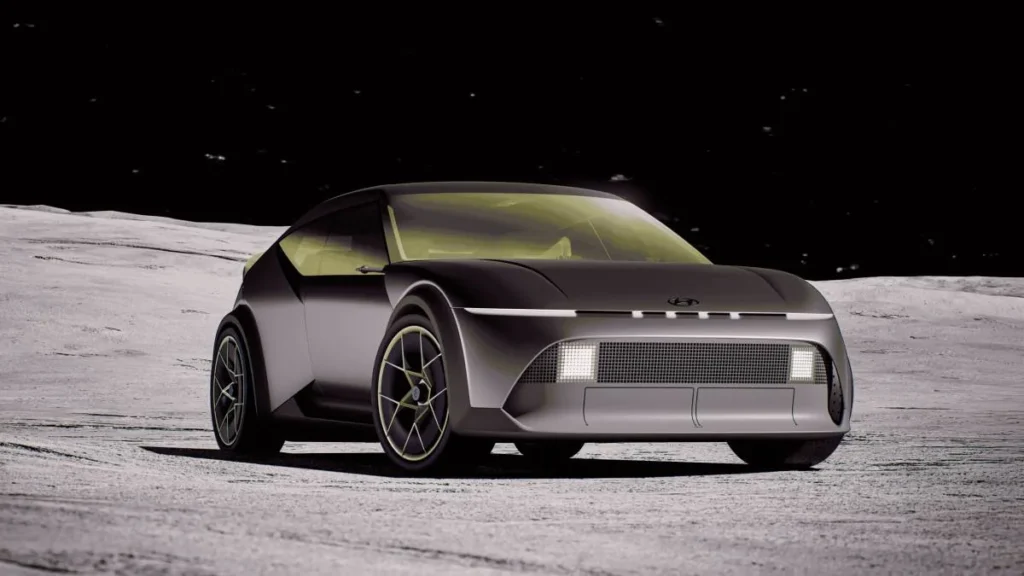
Hyundai’s 2026 product strategy in India reflects a calibrated transition shaped by regulation, cost realities, and shifting consumer expectations. Rather than pivoting abruptly to electric vehicles (EVs), Hyundai is building a multi-powertrain portfolio—petrol, hybrid, and EV—while investing heavily in localization. This approach is aligned with India’s current EV penetration of around 4–5% (2025 estimates) and the uneven development of charging infrastructure across regions.
With a committed investment plan exceeding ₹40,000 crore by 2030 and a pipeline of over 20 product updates and launches, Hyundai is positioning itself to remain competitive against Tata Motors’ EV leadership, Mahindra’s platform innovation, and Maruti Suzuki’s hybrid dominance.
Strategic Direction: Why Hyundai Is Not Rushing Into Full Electrification
Hyundai’s India strategy is based on a key market reality: EV adoption is growing, but not uniformly. Urban centers are witnessing faster adoption, while Tier 2 and Tier 3 markets still depend heavily on ICE vehicles.
This is why Hyundai is focusing on:
- Gradual EV expansion with localized components
- Strong hybrid introduction to bridge the transition gap
- Refined petrol engines for affordability and reliability
According to SIAM industry data, internal combustion vehicles still dominate over 90% of India’s passenger vehicle market, reinforcing Hyundai’s balanced approach.
Key Hyundai Models Expected by 2026
Hyundai Creta EV (Volume Driver)
The Creta EV will likely be Hyundai’s most important mass-market electric offering, targeting the ₹20 lakh segment currently led by Tata Nexon EV.
- Battery: 45–55 kWh (likely LFP chemistry for cost efficiency)
- ARAI Range: 400–500 km
- Real-World Range: 320–420 km
- 0–100 km/h: ~8.5–9 seconds
- Platform: Modified ICE initially (cost control strategy)
- Expected On-road Price: ₹18–24 lakh
Hyundai’s decision to use a modified platform instead of a dedicated EV architecture in this segment reflects cost sensitivity rather than technological limitation.
Next-Generation Hyundai Venue
- Engines: 1.2L petrol, 1.0L turbo petrol
- Real-World Mileage: 17–20 km/l
- 0–100 km/h: ~10–12 seconds
- Expected On-road Price: ₹9–15 lakh
The Venue is expected to introduce expanded ADAS features, making advanced safety technology more accessible in the sub-compact SUV segment.
Hyundai Verna Hybrid (Expected)
Hyundai is expected to introduce a strong hybrid system to compete with established players like Honda and Toyota.
- Powertrain: Petrol + electric motor (self-charging)
- Real-World Mileage: 22–28 km/l
- 0–100 km/h: ~9–10 seconds
- Expected Price: ₹15–20 lakh
Hybrid technology is particularly relevant in India due to high urban congestion, where regenerative braking improves efficiency.
Premium EVs (Ioniq Platform Expansion)
- Platform: E-GMP (dedicated EV architecture)
- Range: 500–600 km
- Charging: Ultra-fast (800V system globally proven)
- Expected Price: ₹45–60 lakh
For reference, Hyundai’s global EV architecture is detailed on the official Ioniq 5 product page, which highlights its 800V fast-charging capability.
On-Road Price Outlook for 2026
EV pricing is expected to improve gradually due to localization and falling battery costs. Lithium prices declined significantly between 2023 and 2024, easing pressure on EV manufacturing costs.
- Entry-level Hyundai cars: ₹7–10 lakh
- Compact SUVs: ₹10–18 lakh
- EV SUVs: ₹18–30 lakh
- Premium EVs: ₹40 lakh+
Variant Comparison: Creta EV vs Rivals
| Variant Level | Hyundai Creta EV | Tata Nexon EV | Mahindra XUV400 |
|---|---|---|---|
| Base | Smaller battery, 6 airbags, ESC | Standard safety, smaller battery | Basic features, large battery focus |
| Mid | Connected tech, larger infotainment | Touchscreen + fast charging | Improved range, more features |
| Top | ADAS, 360° camera, V2L | High safety rating, premium features | Performance-focused tuning |
Feature-Wise Comparison Table (Segment Benchmark)
| Feature | Creta EV | Nexon EV | XUV400 |
|---|---|---|---|
| Infotainment | 10.25-inch touchscreen | 10.25-inch touchscreen | Smaller display |
| ADAS | Yes (Level 2 expected) | Limited | No |
| Safety | 6 airbags, ESC | 5-star Bharat NCAP (expected) | Good structural safety |
| Range | 400–500 km (ARAI) | 325–465 km | 375–456 km |
Crash Safety and Regulatory Landscape
India’s Bharat NCAP program (introduced in 2023) is pushing automakers toward higher safety standards. Hyundai has already standardized six airbags across many models, and future vehicles are expected to align more closely with global crash safety benchmarks.
Independent road test insights from platforms like Autocar India consistently highlight Hyundai’s improvements in structural safety and braking performance.
Real-World Performance Benchmarks
- Hyundai Verna Turbo: ~8.1 sec (0–100 km/h tested)
- Typical Hyundai braking: 38–42 meters (100–0 km/h)
- EV driving: Instant torque, smoother city drivability
Hyundai vehicles generally prioritize refinement and ride comfort over aggressive driving dynamics.
Ownership Cost Analysis: EV vs Petrol vs Hybrid
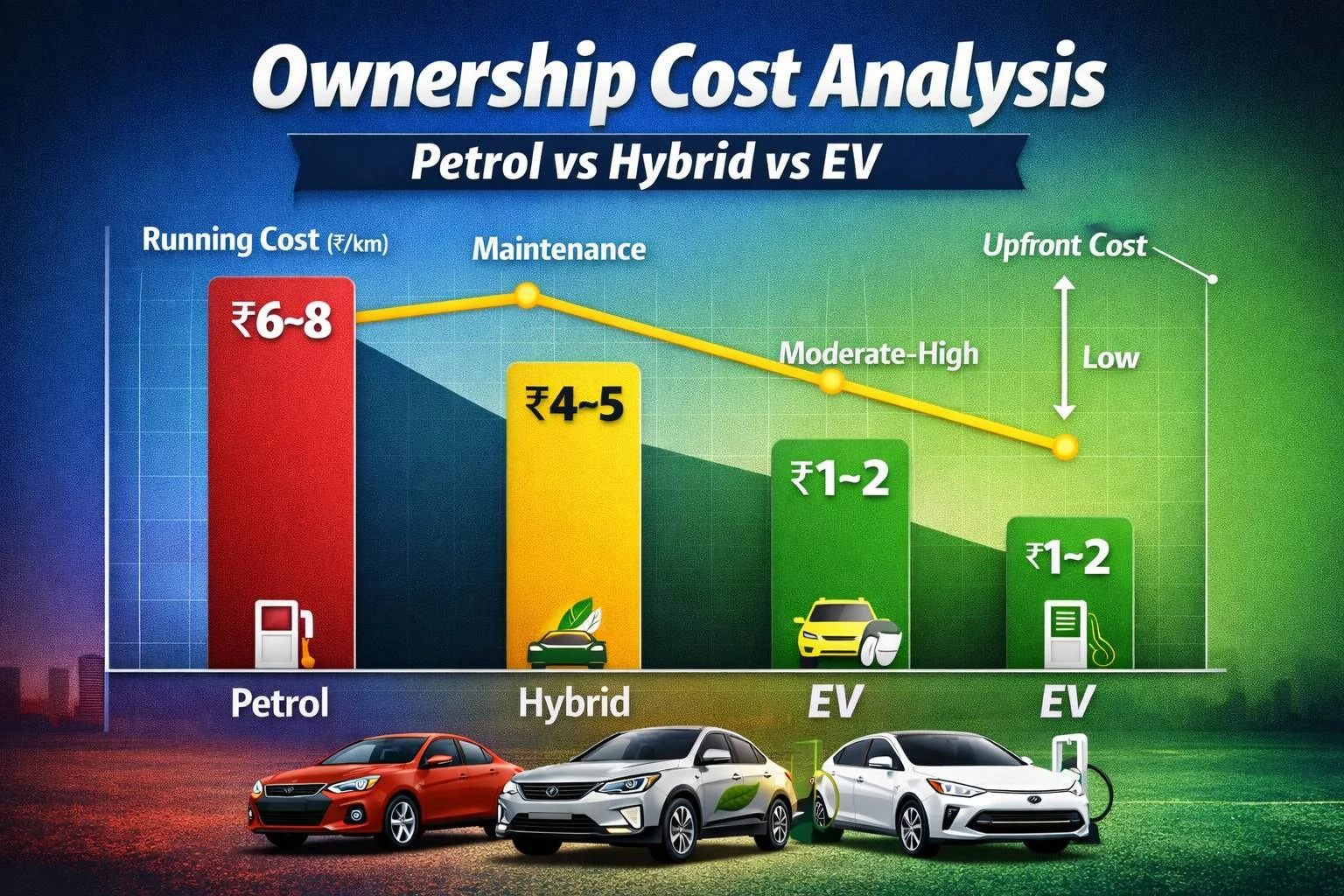
| Factor | Petrol | Hybrid | EV |
|---|---|---|---|
| Running Cost (₹/km) | ₹6–8 | ₹4–5 | ₹1–2 |
| Maintenance | Moderate | Moderate-high | Low |
| Upfront Cost | Low | High | High |
| Best Use Case | Highway | Mixed driving | City + short commute |
This comparison highlights why hybrids may remain highly relevant in India through the late 2020s.
Technology Deep Dive: Platforms and Battery Strategy
- E-GMP Platform: Dedicated EV architecture with flat floor and fast charging
- Modified ICE Platform: Lower cost but less space efficiency
- Battery Types: LFP (cost-effective) vs NMC (higher energy density)
Hyundai is expected to use LFP batteries in mass-market EVs like the Creta EV to maintain competitive pricing.
Key Challenges for Buyers
- Charging infrastructure gaps outside metro cities
- EV resale value uncertainty
- Higher upfront cost despite lower running cost
Conclusion
Hyundai Cars in 2026 will reflect a pragmatic evolution rather than a disruptive shift. The company’s multi-powertrain strategy is well-aligned with India’s current market conditions, offering buyers flexibility across price points and usage needs.
For most buyers, the decision will not simply be about choosing a car—but choosing the right powertrain. Hyundai’s strength lies in offering credible options across all three: petrol, hybrid, and electric.
Key Takeaways
- Creta EV will anchor Hyundai’s mass EV strategy
- Hybrid models expected to gain importance
- ADAS and safety features becoming mainstream
- EV ownership costs significantly lower in long term
- Hyundai maintains focus on comfort, refinement, and technology
FAQ Section
Which Hyundai EV is expected in India in 2026?
The Hyundai Creta EV is expected to be the most important mass-market electric launch.
What will Hyundai cars cost in 2026?
Prices are expected to range from ₹7 lakh to over ₹50 lakh depending on the segment.
Will Hyundai launch hybrid cars in India?
Yes, strong hybrid models are expected, especially in sedans like the Verna.
Are Hyundai cars safe?
New models are expected to meet Bharat NCAP standards with improved safety features.
Should I buy EV or hybrid in 2026?
EVs are ideal for city use, while hybrids are better for mixed driving conditions.
What is the real running cost of Hyundai EVs?
EV running costs can be as low as ₹1–2 per km depending on electricity tariffs.
Ankush Kumar is an automotive analyst specializing in electric vehicles, luxury cars, and real-world performance benchmarking. His work focuses on ownership insights, charging behavior analysis, and practical usability to help buyers make informed decisions based on real conditions rather than specifications alone.
He tracks industry data from global agencies, manufacturer reports, and road test benchmarks to deliver high-authority automotive analysis tailored for Indian buyers.
Follow on Facebook: Ankush Kumar