+91-9646339590



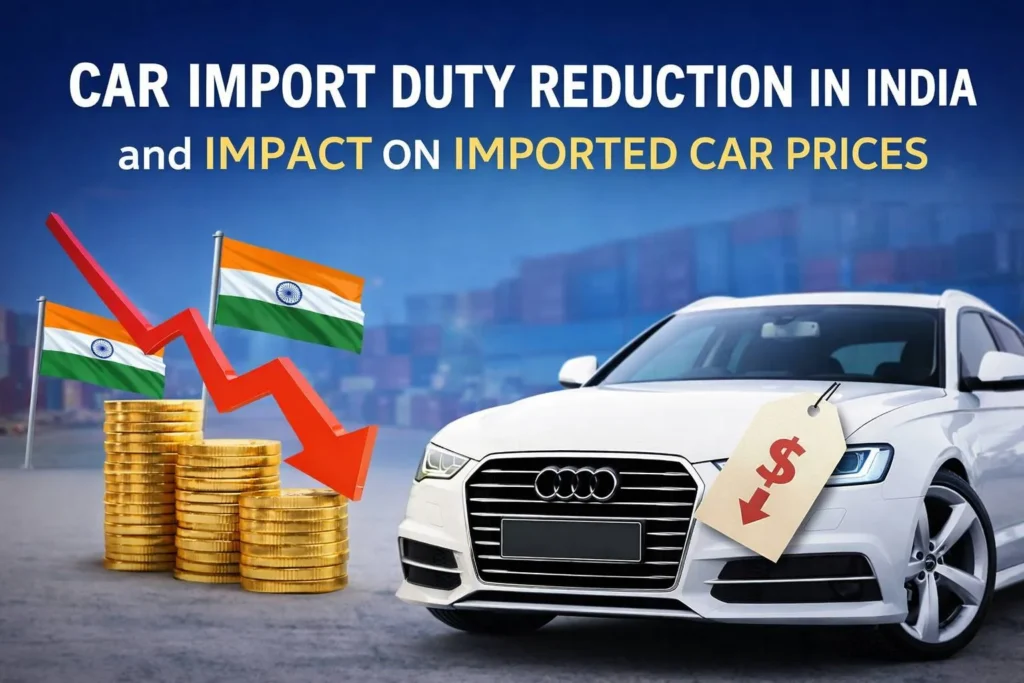
India’s automotive industry is poised for a potentially transformative shift as negotiations under the India–European Union Free Trade Agreement (FTA) move toward proposals for reducing import duties on European cars. Historically, India has imposed some of the highest automotive tariffs globally, with duties on fully built imported vehicles reaching up to 110%. These measures were primarily intended to encourage domestic manufacturing and nurture the local automotive ecosystem.
If implemented, the proposed tariff reductions could significantly alter the economics of importing luxury and performance vehicles into India. While the premium segment would see the most visible effects, the implications extend to supply chain strategies, investment decisions, and the competitive positioning of both international and domestic automakers.
To fully understand the potential impact, it is essential to examine India’s current import duty framework, the strategic goals behind the trade negotiations, and how automakers may adapt to a more liberalized market.
India’s Current Import Duty Structure on Automobiles
India’s vehicle import policy has long prioritized local production. Cars imported as Completely Built Units (CBUs)—vehicles fully assembled abroad—face steep import duties ranging from 70% to as high as 110%, depending on engine size, vehicle price, and additional surcharges. Vehicles priced above $40,000 attract the highest taxes due to customs duties, cess, and other levies.
In contrast, Completely Knocked Down (CKD) kits—where major components are shipped and assembled in India—are subject to substantially lower duties, typically between 15% and 30%. This has incentivized many international automakers, including BMW, Mercedes-Benz, Audi, and Volvo, to establish assembly plants in India rather than importing fully built vehicles.
Industry estimates suggest that over 90% of luxury vehicles sold in India are assembled locally from CKD kits rather than imported as CBUs. This assembly model allows global brands to remain competitive while navigating India’s high-tariff environment.
Proposed Tariff Reductions Under the India–EU Trade Deal
Under the ongoing India–EU FTA discussions, India is considering a phased reduction in tariffs on European-built automobiles. Early proposals suggest duties could decline from the current peak of approximately 110% to 30–40% initially, with potential long-term reductions to around 10%, subject to import quotas.
Initial quotas are expected to permit imports of 100,000–200,000 vehicles annually, expanding gradually over time. Additionally, tariffs on automotive components could be gradually lowered over 5–10 years, reducing costs for manufacturers assembling vehicles locally.
Potential benefits:
- More competitive pricing on fully imported European vehicles
- Lower production costs for locally assembled vehicles through cheaper imported components
- Increased product variety in the Indian market
Why European Automakers Have Pushed for Tariff Reductions
India represents one of the fastest-growing but most challenging automotive markets worldwide. With over 4 million passenger vehicle sales annually, it is the third-largest market globally. However, high tariffs and regulatory complexities have historically limited imports of European vehicles.
Reduced tariffs could provide multiple strategic advantages for automakers:
Broader product portfolios: Manufacturers could introduce niche or performance models that are otherwise unviable under current tariffs.
Lower market entry barriers: Importing vehicles first allows brands to test demand before committing to large-scale local manufacturing.
Enhanced brand positioning: Flagship models, not assembled locally, could enter the market more competitively, reinforcing brand prestige.
How Much Could Prices Actually Fall?
The effect on retail prices will depend on factors such as currency fluctuations, dealer margins, logistics, and manufacturer pricing strategies. However, tariff reductions could still yield meaningful reductions in final pricing, particularly for CBUs.
For example, a European luxury SUV priced globally at ₹50 lakh could cost over ₹1 crore in India today due to duties and taxes. With a potential 50–70% reduction in import duties, the final price could decrease by approximately 15–25%, depending on how much of the cost savings manufacturers pass to buyers.
Major beneficiaries:
- High-performance sports cars
- Limited-edition luxury vehicles
- Flagship European models not assembled locally
Vehicles already assembled domestically via CKD operations would see minimal price changes due to existing lower duty rates.
Why Most Luxury Cars May Not Become Much Cheaper
Although tariff reduction headlines often suggest dramatic price drops, the reality is nuanced. Popular models such as BMW 3 Series, Mercedes-Benz C-Class, and Audi Q5 are mostly CKD-assembled in India. Since these vehicles already benefit from lower duties, reductions on CBUs have little direct impact on their prices.
Therefore, the primary beneficiaries are niche imported vehicles rather than mainstream luxury models.
Impact on India’s Luxury Car Market
Despite rapid overall automotive growth, the luxury segment remains under 1% of total passenger vehicle sales. However, premium vehicle sales have grown steadily, with Mercedes-Benz, BMW, and Audi reporting record performances in recent years.
Reduced tariffs could increase model availability and stimulate demand in niche segments such as high-performance vehicles from Porsche, Lamborghini, and Ferrari, which currently face substantial price premiums due to import duties.
Strategic Implications for Automakers
Hybrid Import–Assembly Models
Automakers may adopt hybrid strategies—assembling high-volume vehicles locally while importing low-volume or niche models directly.
Faster Global Launch Cycles
Lower duties could allow quicker launches of global models in India without waiting for local assembly lines to be set up, giving manufacturers a competitive edge in timing.
Market Testing for New Technologies
Imports could help test emerging technologies, including hybrid drivetrains, advanced driver-assistance systems, and connected vehicle features, before scaling up local production.
Implications for Domestic Automakers
Mass-market automakers like Tata Motors and Mahindra & Mahindra are unlikely to face immediate disruption, as European imports primarily target premium segments. However, the growing premium EV market may increase future competition. Policymakers have reportedly planned to exclude EVs from initial tariff concessions to protect domestic investments.
Impact on India’s Automotive Supply Chain
India’s auto component sector, one of the largest globally, supplies domestic and international manufacturers. Gradual tariff reductions could lower input costs for Indian assembly plants but also increase competition from European suppliers. Policymakers must balance cost reduction with local supplier development.
Regulatory and Policy Considerations
Even with lower tariffs, European vehicles must comply with Bharat Stage VI emissions, vehicle homologation, and evolving safety standards. Infrastructure readiness—including charging networks, smart-city connectivity, and ADAS support—will also determine market success.
Suggested Authoritative References
According to the Society of Indian Automobile Manufacturers (SIAM), India’s passenger vehicle market recently exceeded four million units annually. The European Commission notes growing trade between India and the EU in vehicles and components. Industry insights are further supported by ACMA reports.
Conclusion
Proposed reductions in import duties on European vehicles could reshape India’s luxury and performance car markets by expanding product diversity and improving price competitiveness. The overall effect will depend on quota limitations, phased implementation, and automakers’ strategic responses.
Careful policy execution could expand consumer choice while maintaining India’s robust domestic manufacturing ecosystem.
Key Takeaways
- Import duties on fully built European cars currently reach up to 110%.
- Proposed reductions could lower duties to around 10% under quotas.
- Pricing effects are greatest for fully imported luxury vehicles rather than locally assembled CKD models.
- Domestic mass-market automakers are unlikely to face immediate disruption.
- Lower tariffs could incentivize automakers to bring niche, high-performance, and technologically advanced vehicles to India.
Frequently Asked Questions
Will European cars become significantly cheaper in India?
Some imported luxury vehicles could become more affordable, but many locally assembled models may see only minor price changes.
Which vehicles benefit most from reduced import duties?
High-performance sports cars, limited-edition vehicles, and flagship CBUs are the primary beneficiaries.
Why are import duties so high in India?
High tariffs were implemented to encourage international manufacturers to invest in local production and support India’s automotive ecosystem.
Will tariff cuts affect mass-market vehicles?
No. Most mass-market vehicles are locally produced, and the changes primarily target imported premium vehicles.
When could these changes take effect?
The India–EU trade agreement is still under negotiation, with possible implementation around 2026 or later.
About the Author
Ankush Kumar is an automotive content specialist with over 5 years of experience covering global car markets, hybrid technologies, and EV ecosystem developments. His work focuses on translating complex automotive engineering concepts into practical insights for Indian buyers.
He has analyzed vehicle platforms, powertrain systems, and real-world usability trends across multiple brands. His content emphasizes data-backed evaluation, regulatory awareness, and ownership practicality.