+91-9646339590



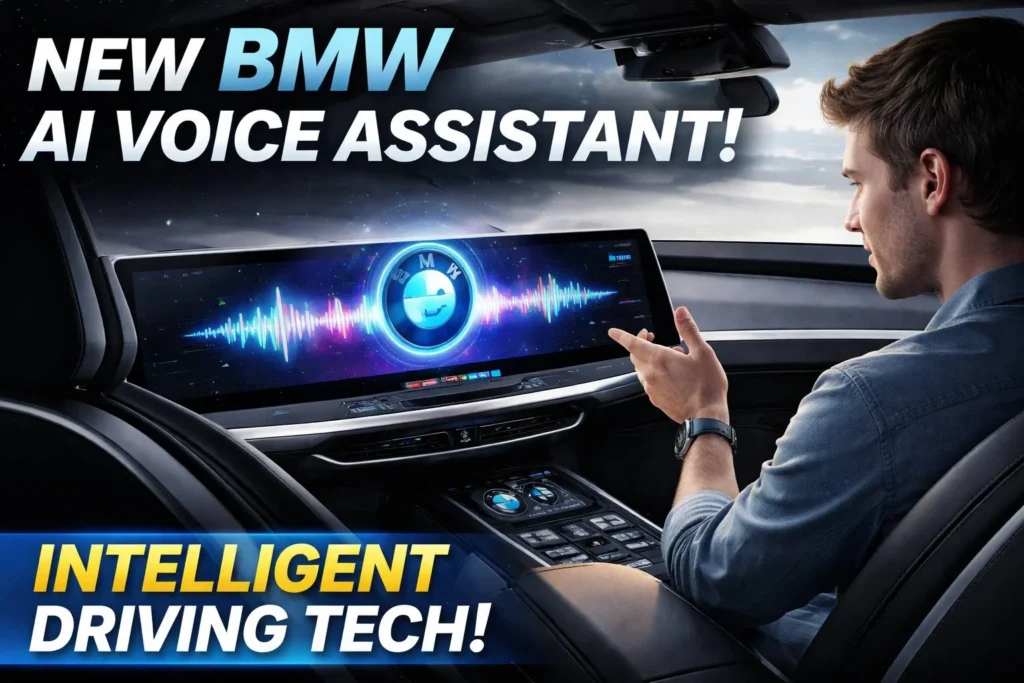
BMW has introduced a new AI-powered driving experience with the rollout of Operating System 9, a software platform that enables natural voice interaction, adaptive navigation, and continuous over-the-air updates.
BMW is entering a new phase of digital mobility by integrating advanced artificial intelligence into its latest vehicles. At the core of this shift is BMW Operating System 9, designed to unify voice interaction, navigation intelligence, driver assistance, and personalization into a single platform.
According to official BMW communication, Operating System 9 represents a major step toward software-defined vehicles, where features evolve continuously through software updates rather than hardware changes.
By combining machine learning, cloud connectivity, and deep sensor integration, BMW is restructuring how drivers interact with vehicles—reducing manual inputs and enabling context-aware automation.
What Defines BMW’s AI-Driven Driving Experience?
BMW Operating System 9 acts as a central intelligence layer connecting multiple vehicle systems into a unified architecture. Unlike traditional infotainment systems, it enables real-time data sharing across vehicle functions.
- Conversational Voice Interface: Understands intent and context
- Adaptive Navigation: Real-time traffic and route intelligence
- AI Driver Assistance: Continuous environment analysis
- OTA Updates: Ongoing feature improvements
- Full Personalization: Driver-specific cabin settings
Key insight: The shift is from reactive controls to predictive, AI-driven interaction.
Natural Voice Interaction and Reduced Distraction
The updated BMW Intelligent Personal Assistant supports natural conversations and multi-step commands without repeated prompts.
- “Find a coffee shop on my route.”
- “Set temperature to 22°C and play music.”
- “Do I have enough range?”
This reduces reliance on touchscreens and helps lower driver distraction.
AI Integration with Navigation and Driver Assistance
BMW combines cameras, radar, and sensors with AI algorithms to interpret driving conditions in real time.
- Adaptive cruise based on traffic and curves
- Navigation-linked lane guidance
- Automated parking with memory function
- 360° hazard detection
Personalization Through AI Learning
The system learns driver behavior and automatically adjusts seat position, climate, lighting, and media preferences.
Profiles linked to BMW ID can sync across vehicles like the BMW iX and BMW i7.
Software-Defined Vehicle and OTA Updates
Operating System 9 enables continuous improvement via over-the-air updates, extending vehicle capabilities over time.
This approach keeps vehicles technologically current without requiring dealership visits.
Real-World Models: BMW iX and i7
These AI features are already available in flagship EVs like the BMW iX and BMW i7, which act as technology platforms for BMW’s future systems.
They also preview the upcoming Neue Klasse architecture, focused on local AI processing and faster system response.
Everyday Driving Benefits
- Reduced driver workload
- Improved route efficiency
- Enhanced safety awareness
- Seamless voice control
Reality check: Performance depends on real-world conditions and infrastructure.
Technical Comparison
| Feature | Traditional | BMW OS 9 |
|---|---|---|
| Voice | Command-based | Natural language AI |
| Navigation | Static GPS | Live intelligent routing |
| Updates | Manual | OTA updates |
| Parking | Basic sensors | Automated memory system |
| Profiles | Limited | Cloud-based personalization |
Data Security and Privacy
BMW uses layered cybersecurity systems. Most processing occurs locally, while cloud data is anonymized. Drivers control data-sharing preferences.
Conclusion
BMW Operating System 9 marks a shift toward intelligent, software-driven mobility. By integrating AI across key systems, BMW is reducing friction between driver and machine.
Final takeaway: The future of driving is defined less by hardware and more by continuously evolving software platforms.
FAQ
What is BMW Operating System 9?
It is BMW’s latest software platform enabling AI-driven features, voice control, and OTA updates.
Which cars use this system?
Models like BMW iX and BMW i7 currently feature it.
Does it improve safety?
Yes, through AI-powered driver assistance and real-time monitoring.
Ankush Kumar is an automotive analyst specializing in electric vehicles, luxury cars, and real-world performance benchmarking. His work focuses on ownership insights, charging behavior analysis, and practical usability to help buyers make informed decisions based on real conditions rather than specifications alone.
He tracks industry data from global agencies, manufacturer reports, and road test benchmarks to deliver high-authority automotive analysis tailored for Indian buyers.
Follow on Facebook: Ankush Kumar