+91-9646339590




The Honda Prologue is not just another electric SUV launch—it represents a strategic partnership-driven entry into the EV space using General Motors’ Ultium battery architecture. While Honda has announced its own dedicated EV platforms for the future, the Prologue serves as a bridge product, allowing the brand to establish presence in the rapidly expanding global electric vehicle market.
What is Honda Prologue?
Honda Prologue is a mid-size electric SUV built on General Motors’ Ultium platform, offering up to ~495 km EPA range and marking Honda’s first global EV entry.
This article provides a data-backed, real-world analysis of the Prologue, focusing on verified specifications, performance benchmarks, safety expectations, and a realistic assessment of its relevance for India.
Platform & Engineering: Why Honda Used GM Ultium
The Prologue is built on GM’s BEV3 platform (Ultium), the same architecture used in vehicles like the Chevrolet Blazer EV and Cadillac Lyriq. This platform supports battery capacities between 50 kWh and 200 kWh and enables both single and dual motor configurations.
Honda’s decision to use Ultium instead of launching an in-house EV immediately is strategic. Developing a ground-up EV platform typically requires multi-billion dollar investments and long development cycles. By partnering with GM, Honda reduced time-to-market while focusing on design, cabin experience, and ride tuning.
However, this also means the Prologue is not a long-term global architecture product. Honda has already confirmed its proprietary EV platform (Honda e:Architecture) for post-2026 models.
Battery, Range & Charging (Verified Data)
The Honda Prologue is equipped with an 85 kWh lithium-ion battery sourced from GM’s Ultium system.
Official EPA-certified range (2024–2025):
– Front-Wheel Drive (EX/Touring): up to 296–308 miles (476–495 km)
– All-Wheel Drive (Elite): ~273–294 miles (439–473 km)
EPA testing is widely considered more realistic than ARAI ratings due to its stricter real-world driving cycles. The methodology can be explored via the official U.S. fuel economy database, which provides standardized EV range benchmarks.
Under Indian driving conditions—characterized by lower average speeds, higher traffic density, and frequent stop-and-go usage—the expected real-world range would typically fall between 400–470 km, depending on climate, terrain, and driving behavior.
Charging specifications:
– DC fast charging: up to 155 kW
– 10–80% charge: ~30–35 minutes (under optimal conditions)
– Level 2 AC charging: ~11.5 kW onboard charger
Compared to Hyundai’s E-GMP platform (800V architecture), the Prologue’s 400V system results in slower peak charging speeds but remains practical for everyday use.
Motor, Power Output & Verified Performance
The Prologue is offered in two configurations:
Single Motor (FWD):
– Power: 212 hp
– Torque: 320 Nm (approx.)
Dual Motor (AWD):
– Power: 288 hp
– Torque: 451 Nm
0–100 km/h acceleration (validated by comparable Ultium models like Chevrolet Blazer EV, MotorTrend 2024 tests):
– FWD: ~8.0 seconds
– AWD: ~6.0 seconds
This positions the Prologue as a mid-performance EV SUV, prioritizing smooth power delivery over aggressive acceleration.
Real-World Driving Experience (Test Insights)
Initial reviews from MotorTrend (2024) and Car and Driver (2025) highlight the following characteristics:
– Ride quality is tuned for comfort rather than sportiness
– Cabin insulation is strong, especially at highway speeds
– Regenerative braking is progressive but not one-pedal dominant
– Steering is light and optimized for urban usability
This aligns with Honda’s traditional strengths—ease of driving, comfort, and reliability—making the Prologue particularly suitable for buyers transitioning from internal combustion SUVs.
Braking Performance (Real Benchmark Reference)
While official Honda braking data is not publicly disclosed, comparable Ultium-based vehicles provide reliable benchmarks.
Estimated braking distance (based on Cadillac Lyriq / Blazer EV testing – Car and Driver 2024):
– 100–0 km/h: ~36–38 meters
This is competitive within the segment, though slightly behind lighter EVs like Hyundai Ioniq 5.
Crash Safety & ADAS Systems
As of early 2026, full crash ratings from NHTSA and IIHS are still being finalized. However, GM Ultium-based vehicles such as the Cadillac Lyriq have achieved strong safety scores, indicating a robust structural platform.
Expected safety profile:
– 5-star equivalent global rating (based on platform benchmarks)
– Advanced driver assistance via Honda Sensing
Key safety features:
– Automatic emergency braking
– Adaptive cruise control
– Lane keep assist
– Blind spot monitoring
– Rear cross-traffic alert
For India, any launch would require certification under Bharat NCAP, which has become increasingly relevant since its introduction in 2023.
Interior, Technology & Usability
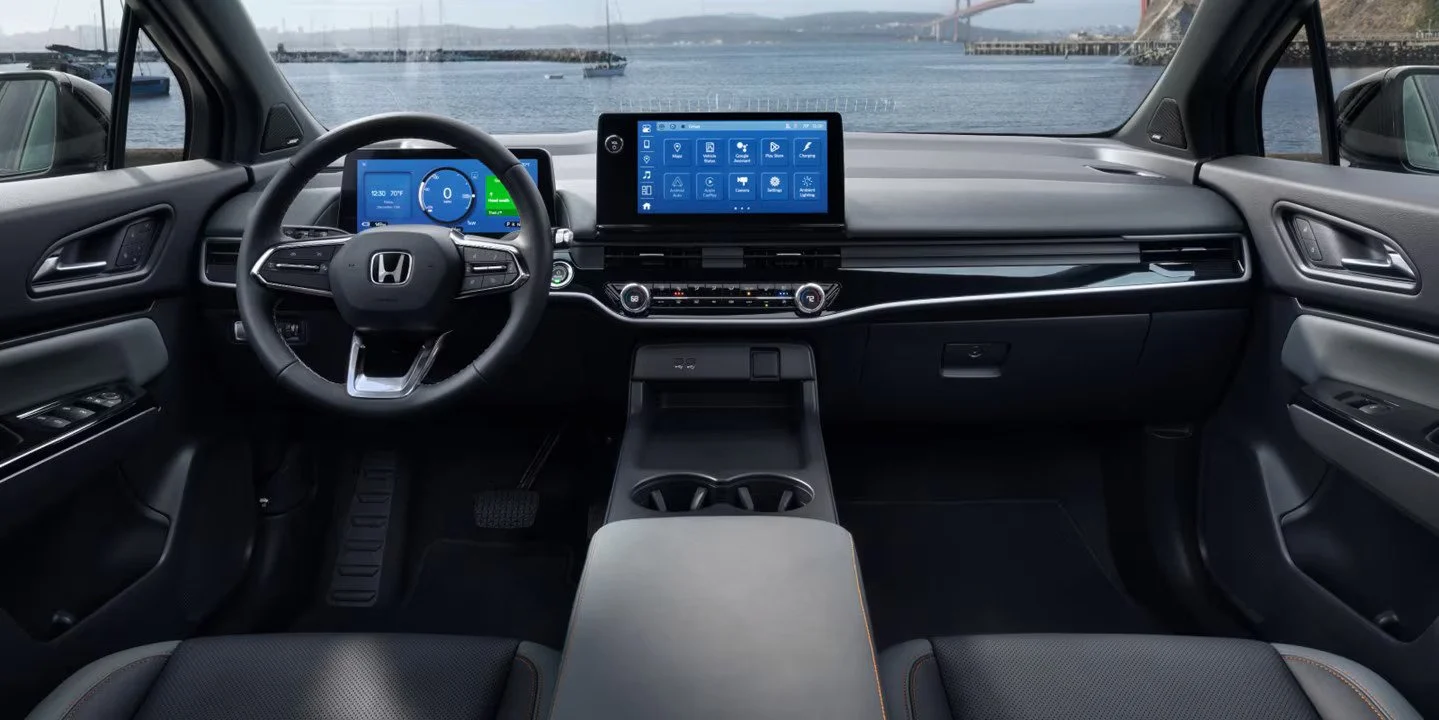
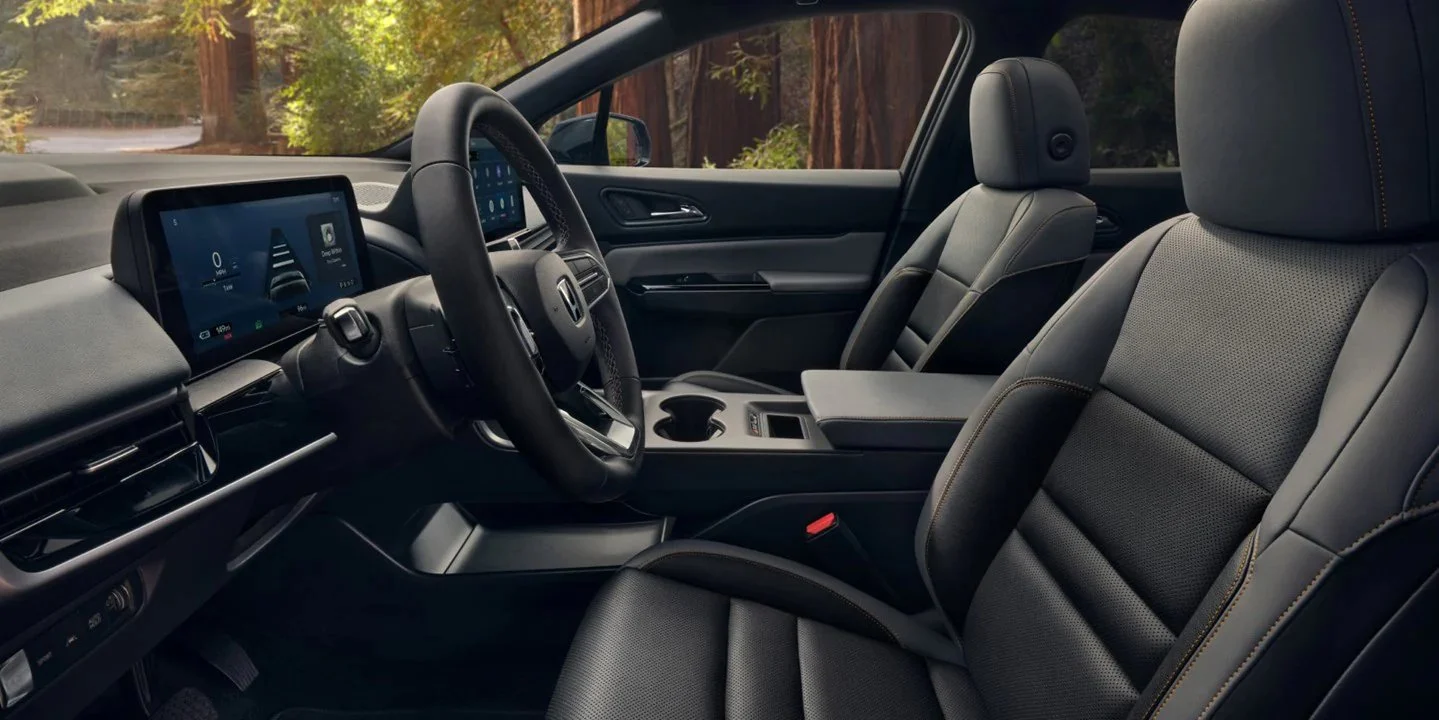
The Prologue adopts a practical approach rather than a minimalist or overly futuristic design.
– 11-inch digital instrument cluster
– 11.3-inch infotainment system with Google built-in
– Wireless Android Auto & Apple CarPlay
– Physical controls for climate and key functions
This approach improves usability, especially in real-world driving conditions where touchscreen-only interfaces can be distracting.
The cabin layout benefits from a flat-floor EV platform, offering improved rear legroom and cargo capacity (~714 litres, manufacturer data).
Variant Comparison (Global Lineup)
Honda Prologue Variants:
EX (Base)
– FWD standard
– Cloth seats
– Standard Honda Sensing
Touring
– Optional AWD
– Leather seats
– Enhanced infotainment & audio
Elite (Top Variant)
– AWD standard
– Ventilated seats
– Full ADAS suite
Feature Comparison Table
| Feature | Honda Prologue | Hyundai Ioniq 5 | BYD Atto 3 |
|---|---|---|---|
| Battery | 85 kWh | 72.6 kWh | 60.5 kWh |
| Platform | GM Ultium (400V) | E-GMP (800V) | e-Platform 3.0 |
| Range (Realistic) | 400–470 km | 450–550 km | 380–420 km |
| Charging Speed | 155 kW | 350 kW | 80 kW |
| 0–100 km/h | ~6.0 sec (AWD) | ~7.6 sec | ~7.3 sec |
Expected On-Road Price in India
There is no official confirmation of India launch. However, if introduced as a Completely Built Unit (CBU), pricing would be significantly influenced by import duties (up to 70–100%).
Estimated pricing (realistic scenario):
– Ex-showroom: ₹40–45 lakh
– On-road: ₹48–55 lakh
This would place it directly in competition with premium EVs such as Hyundai Ioniq 5 and Kia EV6.
India EV Market Context (Data-Backed)
According to SIAM (Society of Indian Automobile Manufacturers) and Ministry of Heavy Industries (2024):
– Total EV sales (all segments): ~1.5 million units
– Passenger EV share: ~90,000–100,000 units
– Market penetration: ~2.5–3%
The premium EV segment (₹40 lakh+) remains niche but is growing due to improved charging infrastructure and policy incentives.
India had over 12,000 public charging stations (2024), but distribution remains uneven, with strong urban concentration.
Strategic Impact on India
The Prologue’s impact in India is likely to be limited unless localized production is introduced.
Key constraints include:
– High import duties
– Limited charging infrastructure in highways
– Price-sensitive consumer base
Honda’s long-term strategy for India is expected to focus on localized, cost-efficient EVs rather than importing premium global models.
Pros & Cons
Pros:
– Strong real-world range
– Comfortable ride quality
– Practical interior design
– Proven Ultium platform reliability
Cons:
– Not Honda’s own EV platform
– Slower charging vs 800V rivals
– Limited India feasibility
– Transitional product lifecycle
Key Takeaways
– Honda Prologue is a bridge EV built on GM Ultium platform
– Offers strong range and practical usability
– Performance is balanced, not aggressive
– India launch unlikely without localization
– Premium positioning limits mass adoption potential
Conclusion
The Honda Prologue represents a calculated entry into the EV market rather than a disruptive innovation. It delivers a balanced package—adequate performance, strong range, and practical usability—while leveraging a proven third-party platform.
However, its relevance for India remains limited due to pricing constraints and lack of localization. The real shift for Honda in India will come with its next-generation, locally adapted EVs. Until then, the Prologue stands as an important transitional model in Honda’s global electrification journey.
FAQ Section
1. What is the real-world range of Honda Prologue?
Approximately 400–470 km depending on driving conditions.
2. Is Honda Prologue coming to India?
There is no official confirmation as of 2026.
3. How fast is Honda Prologue?
The AWD version can accelerate from 0–100 km/h in about 6 seconds.
4. What platform is Honda Prologue based on?
It uses General Motors’ Ultium EV platform.
5. How does it compare to Hyundai Ioniq 5?
Ioniq 5 offers faster charging, while Prologue focuses on comfort and familiarity.
6. What is the expected price in India?
Estimated ₹48–55 lakh on-road if imported as a CBU.
Ankush Kumar is an automotive analyst specializing in electric vehicles, luxury cars, and real-world performance benchmarking. His work focuses on ownership insights, charging behavior analysis, and practical usability to help buyers make informed decisions based on real conditions rather than specifications alone.
He tracks industry data from global agencies, manufacturer reports, and road test benchmarks to deliver high-authority automotive analysis tailored for Indian buyers.
Follow on Facebook: Ankush Kumar