+91-9646339590



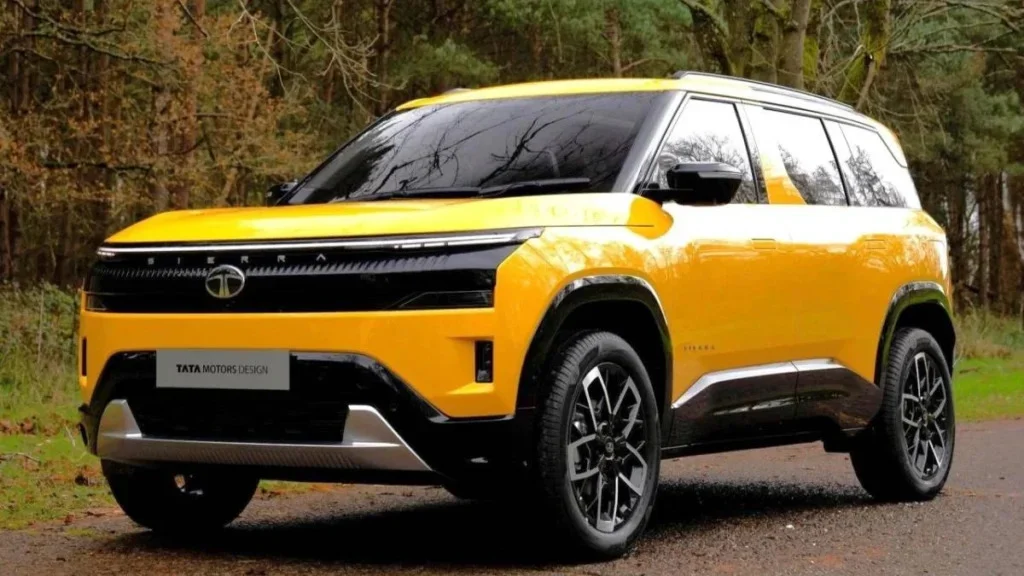
The Tata Sierra EV is one of the most anticipated upcomingelectric SUVs in India, marking Tata Motors’ entry into the premium EV segment. Reviving the legacy of the iconic Sierra, this new electric SUV combines modern design, long driving range, and advanced safety features to meet the evolving expectations of Indian buyers.
Tata Sierra EV Key Specifications (Expected):
- Battery: 60–70 kWh
- Range: 450–550 km (ARAI)
- Real-world Range: 350–420 km
- Price: ₹28–42 lakh
- Launch: Late 2026 – Early 2027
India’s EV passenger vehicle penetration stood at around 2.3% in 2024, but demand is steadily shifting toward premium electric SUVs. According to the Global EV Outlook Report by IEA , battery cost reductions and local manufacturing are accelerating EV adoption in emerging markets like India.
Design: Modern Styling with Iconic Heritage
The Sierra EV retains the essence of the original model, especially its signature rear glass design, while adopting a modern five-door layout for improved practicality. The design focuses on aerodynamics, space efficiency, and road presence.
- Closed front grille for better airflow efficiency
- Flush door handles to reduce drag
- Long wheelbase for enhanced cabin space
- Panoramic rear glass inspired by the original Sierra
Unlike traditional SUVs, electric vehicle design emphasizes airflow optimization and weight distribution, both of which directly impact driving range and efficiency.
Platform and Architecture
The Tata Sierra EV is likely to be built on Tata’s Gen 2 EV platform, derived from the ALFA architecture. While newer models use dedicated EV platforms, this approach allows faster development and cost efficiency.
- Advantage: Proven structure and reduced development cost
- Limitation: Less optimized flat-floor layout compared to dedicated EV platforms
This gradual transition strategy is similar to global automakers shifting from ICE-based platforms to dedicated electric architectures.
Battery, Range, and Real-World Efficiency
The Tata Sierra EV is expected to offer a significant upgrade over existing Tata EVs in terms of battery capacity and driving range.
- Battery Pack: 60–70 kWh lithium-ion
- Claimed Range: 450–550 km (ARAI)
- Real-World Range: 350–420 km
In real-world conditions, EVs in India typically deliver 20–25% lower range than ARAI-certified figures due to factors such as traffic, climate, and driving style, as seen in independent tests by Autocar India.
Performance and Driving Experience
With an expected motor output of 150–200 kW, the Sierra EV should deliver strong performance suitable for both city and highway driving.
- 0–100 km/h: 7.5–8.5 seconds
- Top Speed: Around 160 km/h
- Instant Torque: Smooth and quick acceleration
Electric vehicles provide consistent performance regardless of altitude, making them well-suited for diverse Indian road conditions.
Braking and Regenerative Efficiency
The Sierra EV is expected to feature disc brakes on all four wheels along with multi-level regenerative braking.
- Braking Distance (100–0 km/h): 38–42 meters
- Energy Recovery: Up to 20% in city driving
Regenerative braking enhances efficiency, especially in stop-and-go urban traffic.
Real-World Driving Expectations in India
- City Range: 400–450 km
- Highway Range: 320–380 km
- Thermal Management: Optimized for 40–45°C temperatures
Highway efficiency tends to drop due to increased aerodynamic drag at higher speeds, which is common across all EVs.
Safety Features and Crash Rating
Tata vehicles are known for strong safety performance, and the Sierra EV is expected to target a 5-star Bharat NCAP rating.
- 6–8 airbags
- Electronic Stability Control (ESC)
- Level 2 ADAS (adaptive cruise control, lane assist)
- Advanced battery protection systems
Battery safety and thermal management remain critical aspects of modern EV engineering.
Variants and Expected Options
| Variant | Battery | Drive Type | Positioning |
|---|---|---|---|
| Base | 60 kWh | FWD | Entry-level buyers |
| Mid | 65 kWh | FWD | Balanced features |
| Top | 70 kWh | AWD (expected) | Premium buyers |
Sierra EV vs Rivals
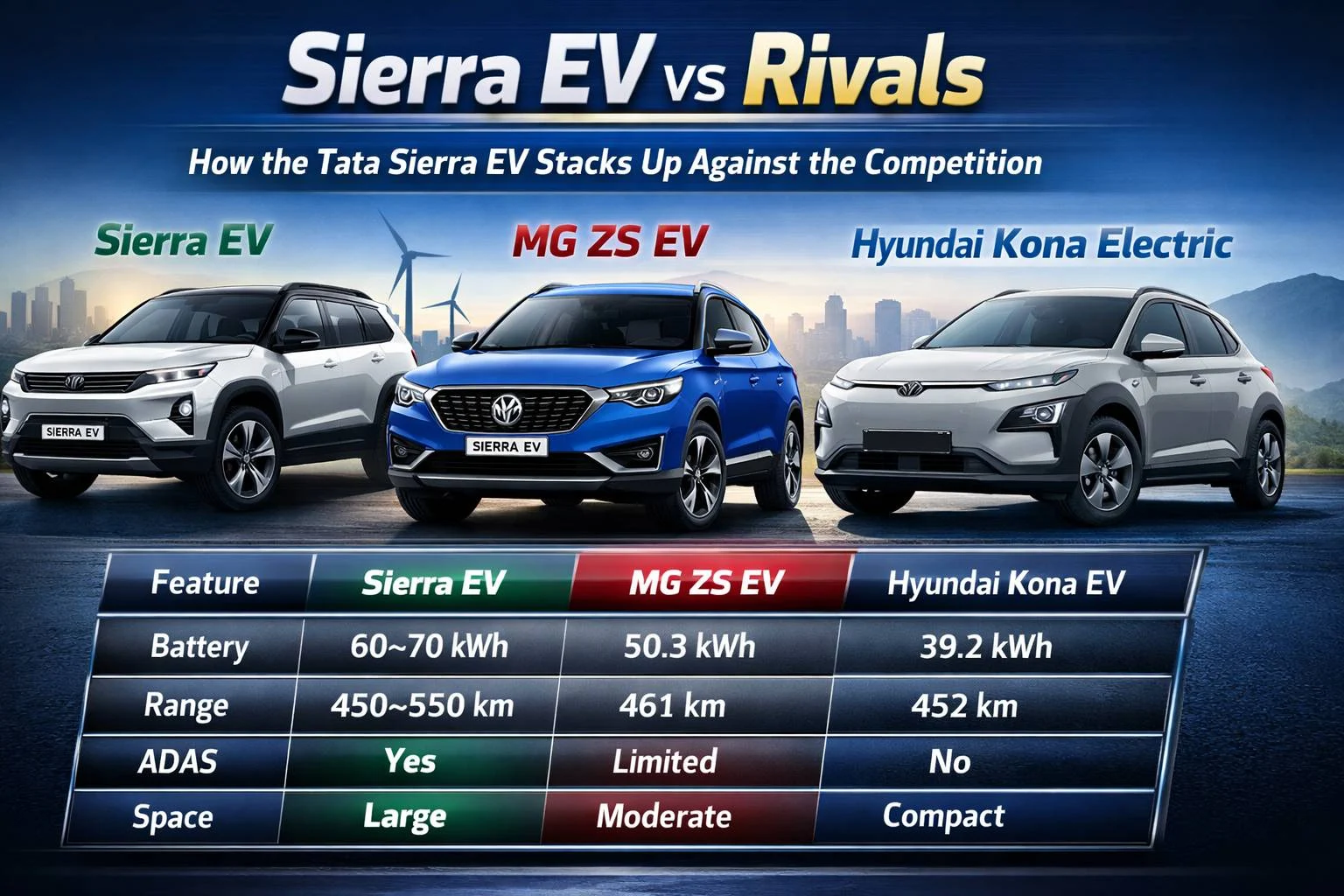
| Feature | Sierra EV | MG ZS EV | Hyundai Kona Electric |
|---|---|---|---|
| Battery | 60–70 kWh | 50.3 kWh | 39.2 kWh |
| Range | 450–550 km | 461 km | 452 km |
| ADAS | Yes | Limited | No |
| Space | Large | Moderate | Compact |
Compared to rivals like the MG ZS EV and Hyundai Kona Electric, the Sierra EV is expected to offer better space, higher battery capacity, and improved long-distance usability.
Expected Price in India
- Base Variant: ₹28–30 lakh
- Mid Variant: ₹32–35 lakh
- Top Variant: ₹38–42 lakh
Battery cost remains a major factor, contributing nearly 35–40% of the total EV price.
Charging and Ownership Cost
- Home Charging: ₹1.2–1.8 per km
- Fast Charging: ₹2.5–4 per km
- Petrol SUV: ₹7–10 per km
While EVs are significantly cheaper to run, charging infrastructure outside major cities is still developing.
Challenges and Limitations
- Reduced efficiency at high speeds
- Charging infrastructure gaps in smaller cities
- Heavier weight compared to ICE SUVs
- Uncertain resale value in premium EV segment
Market Positioning
The Tata Sierra EV is expected to bridge the gap between mass-market EVs and high-end electric SUVs. Its success will depend on real-world usability, pricing strategy, and charging accessibility.
Who Should Buy Tata Sierra EV?
The Tata Sierra EV is best suited for buyers who are looking for a premium electric SUV with strong real-world usability, modern features, and long-term cost savings.
- Urban professionals: Ideal for daily city commutes with occasional highway drives
- Tech-savvy buyers: Those who value ADAS, connected features, and EV innovation
- Long-term owners: Lower running costs make it suitable for users planning 5–8 years of ownership
- Safety-focused families: Expected 5-star crash rating and advanced safety features
- Home charging users: Best suited for buyers with dedicated home charging setup
If you want a future-ready SUV with lower fuel costs and modern driving experience, the Sierra EV could be a strong choice in its segment.
Who Should Skip Tata Sierra EV?
Despite its advantages, the Sierra EV may not be the right fit for every buyer, especially considering current EV limitations in India.
- Frequent long-distance highway drivers: Charging infrastructure can still be inconsistent on certain routes
- Rural or Tier-3 users: Limited access to fast charging stations
- Budget-conscious buyers: Higher upfront cost compared to petrol SUVs
- Buyers without home charging: Dependence on public charging increases inconvenience and cost
- Resale-focused users: EV resale market is still evolving in India
If your usage depends heavily on long highway trips or you lack reliable charging access, a hybrid or petrol SUV may still be a more practical option for now.
Conclusion
The Tata Sierra EV represents a significant step forward in India’s electric vehicle journey. With a strong focus on range, safety, and practicality, it has the potential to become a benchmark in the premium electric SUV segment.
Note: Specifications and features mentioned are based on industry estimates and may change at launch.
Key Takeaways
- Expected range of up to 550 km (ARAI)
- Premium SUV positioned in ₹28–42 lakh range
- Strong safety focus with expected 5-star rating
- Lower running cost compared to petrol SUVs
- Charging infrastructure remains a key factor
FAQs
1. What is the expected launch date of Tata Sierra EV?
Late 2026 or early 2027.
2. What is the expected range?
350–420 km in real-world conditions.
3. Will it support fast charging?
Yes, 10–80% charging is expected in 40–50 minutes.
4. Will there be an AWD variant?
Yes, a dual-motor AWD version is expected in top variants.
5. What is the expected price?
₹28 lakh to ₹42 lakh (approx.).
Ankush Kumar is an automotive analyst specializing in electric vehicles, luxury cars, and real-world performance benchmarking. His work focuses on ownership insights, charging behavior analysis, and practical usability to help buyers make informed decisions based on real conditions rather than specifications alone.
He tracks industry data from global agencies, manufacturer reports, and road test benchmarks to deliver high-authority automotive analysis tailored for Indian buyers.
Follow on Facebook: Ankush Kumar