+91-9646339590



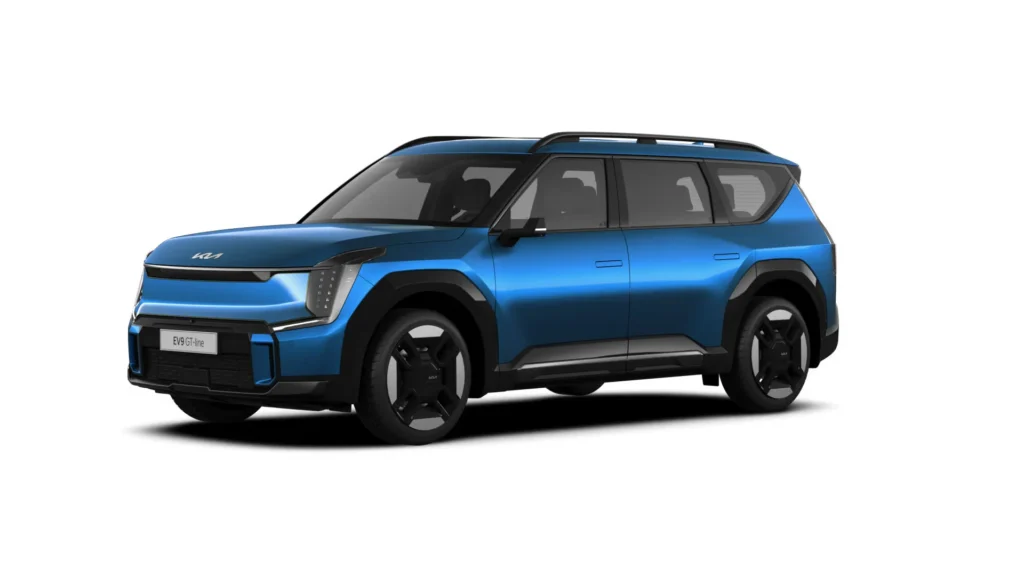
Kia is preparing one of its most important launches for India in 2026 — a next-generation SUV that could redefine the mid-size SUV segment with hybrid technology, advanced safety, and aggressive pricing. This upcoming model has the potential to become Kia’s biggest breakthrough since the original Seltos.
However, Kia has not officially confirmed the exact model yet. Based on industry insights and product strategy, two strong possibilities emerge — a next-generation Kia Seltos or an all-new hybrid SUV positioned above the Seltos.
This distinction is crucial because it directly affects pricing, features, and market positioning. Regardless of final branding, this SUV is being developed to compete in the high-growth mid-size SUV India 2026 segment, currently dominated by Hyundai Creta and Tata Harrier.
According to SIAM 2024 data, SUVs now account for over 50% of total passenger vehicle sales in India — making this segment the most competitive battleground for automakers.
Kia SUV 2026 Expected Highlights
- Launch: Early 2026
- Price: ₹12.5 lakh – ₹23 lakh (expected)
- Engine Options: Petrol, Diesel, Strong Hybrid
- Key Features: ADAS, dual screens, OTA updates
- Target Rivals: Hyundai Creta, Tata Harrier
Launch Timeline Breakdown (Expected)
- Testing Phase: Ongoing (global + India testing)
- Global Reveal: Late 2025
- India Launch: Early 2026
- Bookings: Open soon after reveal
- Deliveries: Within 6–10 weeks
What this means: Early buyers may benefit from lower waiting periods and introductory pricing.
Design & Platform Strategy: Built for Modern Requirements
The SUV is expected to use Hyundai-Kia’s updated modular architecture (derived from the N3 platform), supporting multiple powertrains and improved safety standards.
- Wider stance for better highway stability
- Higher use of advanced high-strength steel (improves crash safety)
- Improved structural rigidity for better ride quality
- Longer wheelbase for increased rear-seat comfort
Kia’s “Opposites United” design philosophy will continue, with EV-inspired elements:
- Connected LED DRLs and tail lamps
- Parametric grille (partially closed for efficiency)
- Flush door handles (better aerodynamics)
- Sporty yet upright SUV stance
Expert Insight: Even small aerodynamic improvements can increase highway fuel efficiency by 2–4%.
Engine Options & Hybrid Technology Explained
- 1.5L NA Petrol (115 PS)
- 1.5L Turbo Petrol (160–170 PS)
- 1.5L Diesel (115 PS)
- Strong Hybrid (expected 130–150 PS combined)
Simple explanation: A hybrid system uses both an engine and electric motor, reducing fuel consumption in city driving while improving efficiency.
This hybrid option could become a major differentiator, especially as fuel prices remain high in India.
Performance & Acceleration (Real-World Estimates)
- NA Petrol: 11.5–12.5 seconds (0–100 km/h)
- Turbo Petrol: ~8.8–9.2 seconds
- Diesel: 11–12 seconds
- Hybrid: ~9 seconds (smooth acceleration focus)
What this means: Turbo variants are best for performance, while hybrid models focus on efficiency and smooth driving.
Braking & Suspension Setup
- 100–0 km/h braking: ~37–40 meters
- All-wheel disc brakes (top variants)
- Electronic Stability Control (standard)
Suspension:
- Front: MacPherson Strut
- Rear: Torsion Beam (comfort-focused, cost-efficient setup)
Expert Insight: This setup prioritizes ride comfort on Indian roads rather than sporty cornering performance.
Interior, Features & Smart Technology
- Dual 12.3-inch displays
- Wireless Android Auto & Apple CarPlay
- Over-the-air (OTA) updates
- Level 2 ADAS
- 360-degree camera
- Ventilated seats
According to Deloitte Automotive Study 2025, over 65% of buyers consider in-car technology a key purchase factor.
What this means: This SUV is likely to feel more premium than its price suggests.
Safety & Crash Rating Expectations
- 6 airbags standard
- ADAS safety suite
- ESC and traction control
- Reinforced body structure
Expected rating:
- Bharat NCAP: Target 5-Star
Aligned with Global NCAP safety protocols.
Real-World Driving Experience
- Comfort-focused suspension tuning
- Light steering for easy city driving
- Improved high-speed stability
- Better cabin insulation vs current models
Simple takeaway: Built for daily comfort and long drives, not aggressive performance.
Kia SUV 2026 vs Creta vs Harrier – Quick Comparison
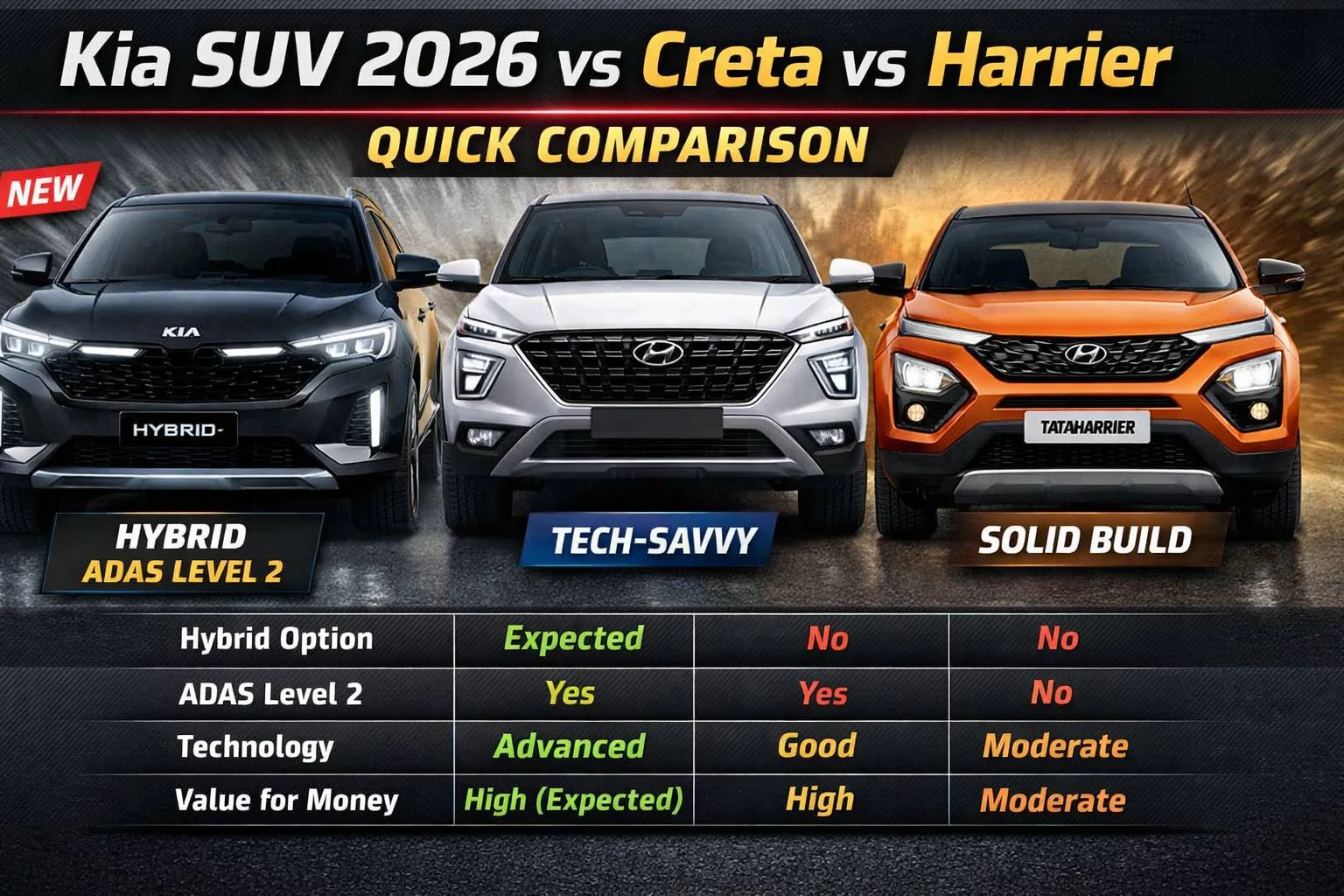
| Feature | Kia SUV 2026 | Hyundai Creta | Tata Harrier |
|---|---|---|---|
| Hybrid Option | Expected | No | No |
| ADAS Level 2 | Yes | Yes | Partial |
| Technology | Advanced | Good | Moderate |
| Value for Money | High (expected) | High | Moderate |
Price & Market Positioning
- Base: ₹12.5–13.5 lakh
- Mid: ₹15–17 lakh
- Top: ₹19–21 lakh
- Hybrid: ₹20–23 lakh
What this means: Kia is likely to offer more features at similar pricing, making it highly competitive.
Ownership Cost & Resale Value
- Service cost: ₹5,000–₹8,000 annually
- Service interval: 10,000 km / 1 year
- Resale value: ~60–70% after 3 years
Expert Insight: Strong resale and low maintenance make Kia a practical long-term choice.
Waiting Period Expectation
- Initial waiting: 4–10 weeks
- Top variants: Higher demand, longer waiting
Tip: Early booking can significantly reduce waiting time.
Advantages & Limitations
Advantages:
- Feature-loaded package
- Hybrid efficiency advantage
- Strong safety focus
- Competitive pricing
Limitations:
- Hybrid variant may be expensive
- Not designed for sporty driving
- DCT performance in traffic may vary
Final Verdict
Kia’s 2026 SUV is shaping up to be one of the most important launches in the Indian market. With hybrid technology, advanced safety features, and aggressive pricing, it has the potential to disrupt the segment and challenge established leaders.
Quick Verdict: A high-impact launch that could reset expectations for value, technology, and efficiency in the mid-size SUV segment.
Key Takeaways
- Could be next-gen Seltos or a new hybrid SUV
- Strong focus on safety and technology
- Hybrid variant could be a segment-first advantage
- Competitive pricing strategy expected
- Designed for comfort and daily usability
FAQs
1. What is the expected mileage of Kia SUV 2026 in India?
Petrol: 16–18 km/l, Diesel: 20–22 km/l, Hybrid: 22–25 km/l (estimated).
2. Will Kia SUV 2026 offer a hybrid option in India?
Yes, a strong hybrid variant is highly expected based on Kia’s global strategy.
3. What will be the price of Kia SUV 2026?
Expected between ₹12.5 lakh and ₹23 lakh depending on variant.
4. How safe will Kia SUV 2026 be?
It is expected to target a 5-star Bharat NCAP rating with ADAS features.
5. What is the expected waiting period?
Around 4 to 10 weeks depending on demand and variant.
6. Should I wait for Kia SUV 2026?
Yes, if you want better technology, hybrid efficiency, and strong value in this segment.
About the Author
Ankush Kumar is an automotive analyst with over 5 years of experience covering the Indian car market, luxury vehicles, and electric mobility trends. His work focuses on practical comparisons, real-world performance, and ownership insights to help buyers make informed decisions.
He regularly tracks industry updates, manufacturer reports, and road test data from publications like Autocar India, using them to create clear, data-backed analysis that is easy to understand and useful for everyday buyers.
Follow on Facebook:
Ankush Kumar