+91-9646339590



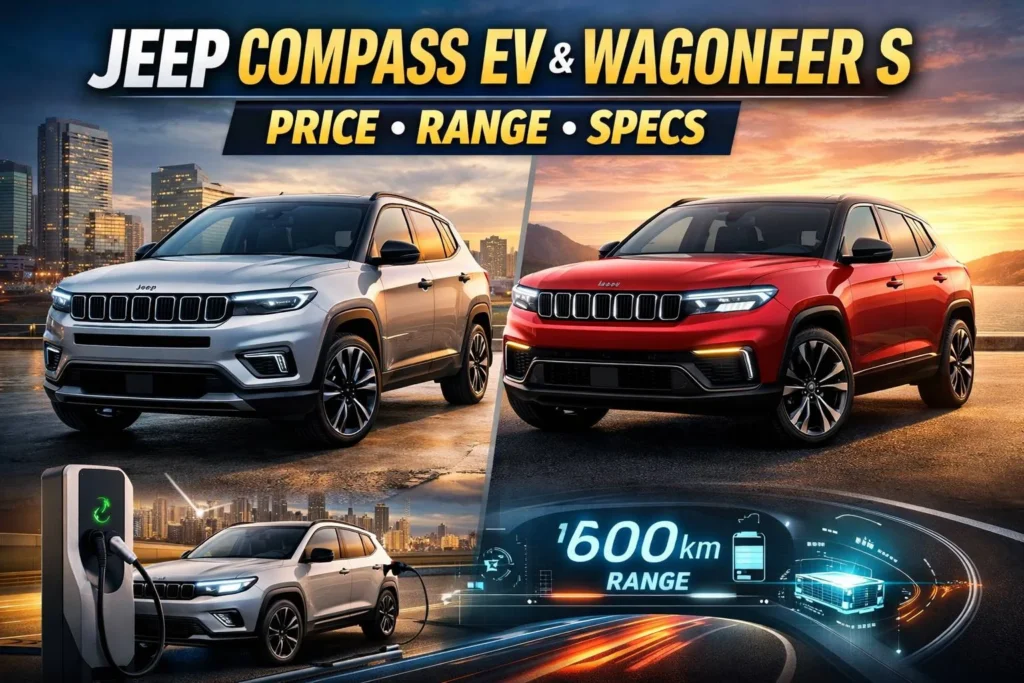
Jeep’s electrification strategy has entered a decisive phase with the introduction of the Compass EV and Wagoneer S. Backed by parent company Stellantis, these models are not experimental concepts—they are built on dedicated electric platforms designed to compete with global benchmarks like the Tesla Model Y Performance and Hyundai Ioniq 5.
The shift is driven by global demand. According to the International Energy Agency (IEA) Global EV Outlook, electric vehicle sales crossed 14 million units in 2023, accounting for nearly 18% of total car sales worldwide. SUVs are the fastest-growing segment within this transition, making Jeep’s EV roadmap critical for its long-term positioning.
STLA Platform Strategy: The Core of Jeep’s EV Future
Both SUVs are built on Stellantis’ advanced STLA electric architectures, designed for scalability across segments:
- STLA Medium (Compass EV): Optimized for mid-size vehicles with battery capacities ranging from ~73–98 kWh
- STLA Large (Wagoneer S): Supports high-performance EVs with 800V systems and ~100 kWh battery packs
This modular strategy mirrors industry leaders such as Volkswagen’s MEB platform and Hyundai’s E-GMP architecture, enabling flexible performance, range, and cost optimization across markets.
Compass EV: Bridging Mass Adoption
Powertrain and Engineering
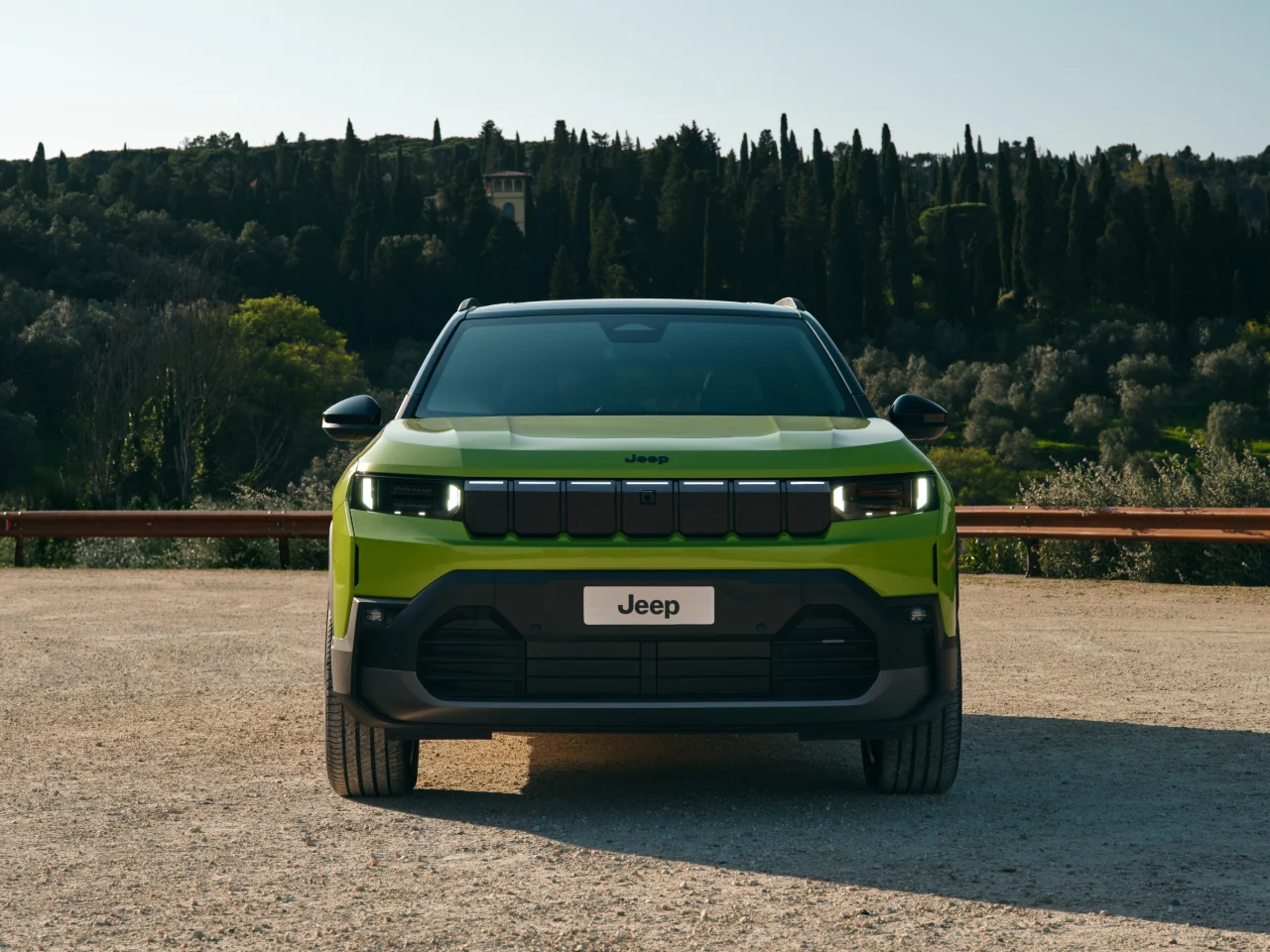
The Compass EV targets buyers transitioning from internal combustion SUVs and hybrid vehicles. Expected configurations include:
- Hybrid and plug-in hybrid options for emerging markets
- Fully electric variant with up to ~600 km WLTP range
- Front-wheel drive base with optional dual-motor AWD
The electric drivetrain delivers instant torque, significantly improving urban responsiveness compared to turbocharged petrol or diesel engines.
Real-World Performance Expectations
Based on STLA Medium benchmarks and comparable EVs in this segment:
- 0–100 km/h: ~7.8–8.5 seconds (dual motor AWD)
- Real-world range: ~420–500 km
- Efficiency: ~14–16 kWh/100 km
Battery placement under the floor lowers the center of gravity, improving stability and reducing body roll. However, the additional battery weight slightly affects agility in tight cornering scenarios.
Braking, Stability and Regeneration
- Estimated 100–0 km/h braking distance: ~38 meters
- Regenerative braking can recover up to ~25% energy in city driving
- Electronic stability systems tuned for higher vehicle mass
Interior Technology and Software
- 12.3-inch digital instrument cluster
- Connected infotainment with over-the-air (OTA) updates
- Level 2 ADAS (adaptive cruise control, lane centering, traffic assist)
Wagoneer S: Jeep’s High-Performance EV Flagship
Powertrain and Acceleration
The Wagoneer S represents Jeep’s entry into the premium performance EV segment, competing with models like the Tesla Model Y Performance and BMW iX.
- Dual-motor all-wheel drive system
- Power output: ~600 hp
- 0–100 km/h: ~3.5 seconds
- Battery capacity: ~100 kWh
- Range: ~640 km (WLTP)
Unlike traditional Jeep SUVs, the Wagoneer S prioritizes aerodynamics, with a significantly lower drag coefficient to enhance efficiency and high-speed stability.
Driving Dynamics and Ride Quality
- Near 50:50 weight distribution
- Torque vectoring improves cornering control
- Air suspension enhances highway comfort
This marks a strategic shift toward urban luxury performance rather than hardcore off-road capability.
Thermal Management and Charging
- Fast charging up to ~350 kW (10–80% in ~20 minutes under ideal conditions)
- Liquid-cooled battery system ensures consistent performance
- Estimated braking distance: ~36 meters
Safety and Crash Expectations
While official crash test results are pending, Stellantis platforms are engineered to meet global safety benchmarks:
- Expected 5-star Euro NCAP rating
- Advanced driver monitoring systems
- Autonomous emergency braking and blind-spot detection
Expected Price in India
| Model | Expected Ex-Showroom | Estimated On-Road |
|---|---|---|
| Compass EV | ₹35–40 lakh | ₹40–46 lakh |
| Compass Hybrid | ₹28–32 lakh | ₹32–37 lakh |
| Wagoneer S | ₹70–80 lakh | ₹80–92 lakh |
Pricing will largely depend on localization strategy. CKD assembly can significantly reduce import duties compared to fully imported CBU units.
Compass EV vs Wagoneer S: Key Differences
| Feature | Compass EV | Wagoneer S |
|---|---|---|
| Segment | Mid-size SUV | Luxury Performance SUV |
| Power | 150–250 hp | ~600 hp |
| Range | Up to 600 km | ~640 km |
| Charging | Up to 150 kW | Up to 350 kW |
| Platform | STLA Medium | STLA Large |
Competitive Benchmarking
Compared to the Tesla Model Y Performance, the Wagoneer S offers higher peak power but may lag in software ecosystem maturity and charging network integration. Against the BMW iX, Jeep positions itself as a performance-focused alternative with aggressive pricing.
The Compass EV, meanwhile, targets a less saturated segment, especially in emerging markets where hybrid-to-EV transition is still evolving.
India Market Outlook and Challenges
India’s EV market is expanding rapidly, with passenger EV sales growing over 49% in 2024 (SIAM data). However, several challenges remain:
- Charging infrastructure still concentrated in metro cities
- High battery costs impacting pricing
- Limited premium EV demand outside Tier-1 markets
Government incentives such as 5% GST on EVs and state-level subsidies support adoption, but large SUVs remain sensitive to pricing and import duties.
Conclusion
The Compass EV and Wagoneer S represent a calculated and strategic transformation for Jeep. By leveraging scalable STLA platforms and focusing on both mass and premium segments, the brand is positioning itself for the next phase of automotive evolution.
However, success in India will depend heavily on pricing strategy, localization, and charging infrastructure development. Execution—not just product capability—will determine whether these EVs achieve meaningful market scale.
Key Takeaways
- Jeep expands its EV lineup with Compass EV and Wagoneer S
- STLA platforms enable scalable performance and efficiency
- Wagoneer S delivers high-performance (~3.5 sec 0–100 km/h)
- Compass EV targets mass-market electrification
- India success depends on pricing and localization strategy
FAQ
What is the expected range of the Jeep Compass EV?
Up to ~600 km WLTP, with real-world range around 420–500 km.
How fast is the Wagoneer S?
It can accelerate from 0–100 km/h in approximately 3.5 seconds.
Will these EVs launch in India?
The Compass EV is expected to launch first, while Wagoneer S may arrive as a premium import.
How does Wagoneer S compare to Tesla Model Y?
It offers higher power, but Tesla leads in software and charging ecosystem.
What are the charging capabilities?
Compass EV supports up to ~150 kW, while Wagoneer S supports up to ~350 kW fast charging.
Are these suitable for long-distance travel?
Yes, but charging infrastructure availability remains a key factor in India.
Disclaimer: Performance figures and specifications mentioned are based on platform data, manufacturer insights, and comparable EV benchmarks. Final production specifications may vary.
About the Author
Ankush Kumar is an automotive content specialist with over 5 years of experience covering global car markets, hybrid technologies, and EV ecosystem developments. His work focuses on translating complex automotive engineering concepts into practical insights for Indian buyers.
He has analyzed vehicle platforms, powertrain systems, and real-world usability trends across multiple brands. His content emphasizes data-backed evaluation, regulatory awareness, and ownership practicality.